Table of Contents
Table of Contents
Cleaning your dog's ears at home is one of the simplest ways to prevent wax buildup, odor, and irritation before they turn into something bigger. Done correctly, it takes just a few minutes and can become a routine part of grooming that most dogs tolerate well, especially with a treat waiting at the end. The real skill is knowing what to use, how deep to go, and when a dirty-looking ear is actually a sign that a cotton ball is not going to fix the problem.
This guide covers the full process step by step: how often to clean, mistakes that cause more harm than good, and the warning signs that mean it is time to stop cleaning and get your dog evaluated. If your dog is already showing pain, odor, or discharge, home cleaning is not the right first move. That situation calls for a proper look from a licensed veterinarian, and a telehealth visit can often get you answers the same day. For a deeper look at what an active infection looks like, our dog ear infection guide covers causes, symptoms, and treatment in detail.
Why Regular Ear Cleaning Matters for Dogs
A dog's ear canal is shaped differently than a human's. It runs vertically before turning horizontally toward the eardrum, which means wax, moisture, and debris can settle deep inside and linger instead of draining out on their own. Breeds with floppy ears, like cocker spaniels and basset hounds, or breeds with heavy hair growth inside the canal, like poodles and schnauzers, tend to trap even more debris because airflow to the canal is reduced.
Routine cleaning removes the wax and moisture that would otherwise build up and create conditions where yeast and bacteria thrive. It helps to be clear that cleaning is a preventive habit, not a treatment for an ear that is already infected or inflamed. If your dog's ears already smell unpleasant, look red, or seem painful, cleaning them at home first can mask symptoms or push debris deeper. Reviewing how dog ear infections typically present is a smart step before doing anything at home in that scenario.
What You'll Need Before You Start
Gathering supplies ahead of time keeps the process calm and quick, which matters to a dog who is not thrilled about having their ears handled. You want a veterinarian-approved ear cleaning solution formulated for dogs. Avoid alcohol-based products, hydrogen peroxide, or homemade mixtures with vinegar or essential oils, since these can sting broken or irritated skin and, in some cases, damage delicate tissue inside the canal. If you are curious what other home remedies are safe or unsafe, our article on dog ear infection home remedies breaks down what actually works.
Cotton balls or soft gauze squares work well for wiping away loosened debris from the visible part of the ear. Cotton swabs, or Q-tips, should never go inside the ear canal itself. They tend to push wax and debris deeper rather than removing it, and they can injure the eardrum if inserted too far. Keep a small stash of treats nearby for positive reinforcement, along with a towel in case of head shaking, and try to clean in a calm, well-lit space where your dog feels comfortable.
Step-by-Step: How to Clean Your Dog's Ears
Start by checking the ear before you clean it. Look for redness, swelling, unusual odor, or dark discharge. A small amount of light brown wax is normal, but anything that smells foul or looks inflamed is a signal to pause and consult a veterinarian rather than proceed with cleaning.
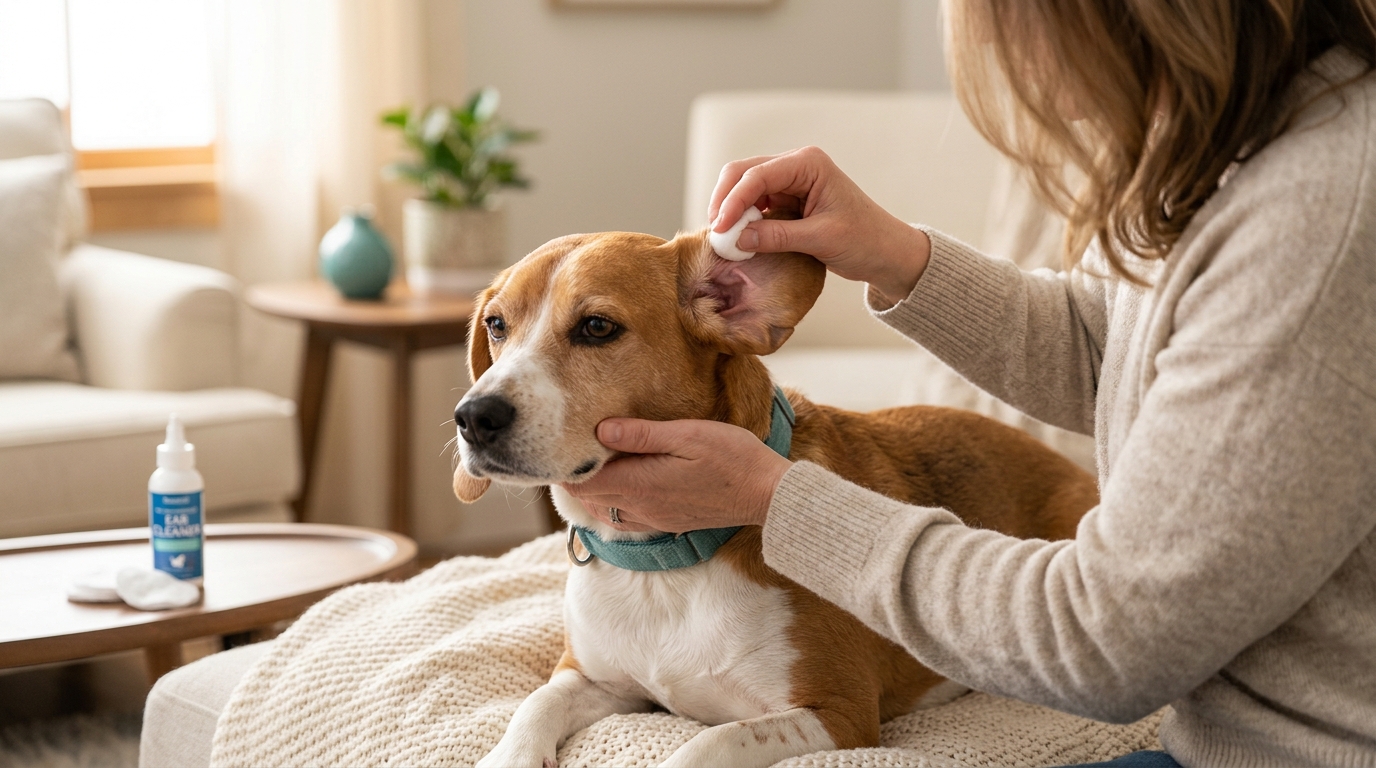
If the ear looks healthy, gently lift the ear flap, or pinna, to expose the canal opening. Fill the canal generously with the ear cleaning solution, holding the applicator tip near the opening without pushing it deep inside. Massage the base of the ear for several seconds. You should hear a soft squelching sound as the solution works through the wax and debris lodged inside.
Let go and allow your dog to shake its head. This is a normal and helpful part of the process, since shaking helps bring loosened debris up and out of the canal. Once your dog has finished shaking, use a cotton ball or gauze square to wipe away the debris now visible at the opening of the ear and along the inner flap. Never insert cotton or fingers deep into the canal itself. Reward your dog with a treat and calm praise throughout, especially if they stayed relaxed during the process, since this builds a positive association for next time.
How Often Should You Clean Your Dog's Ears
There is no single answer that fits every dog. Frequency depends on ear shape, breed, activity level, and whether your dog swims regularly. Dogs with upright ears and minimal hair inside the canal may only need cleaning once a month or even less. Dogs with floppy ears, heavy coats, or frequent water exposure may benefit from cleaning every one to two weeks.
Dogs with allergies or a history of chronic ear issues sometimes need more frequent cleaning, but that schedule should be set by a veterinarian rather than guessed at home. It helps to understand common causes of dog ear infections if your dog seems to need cleaning more often than usual, since an underlying allergy or skin condition is often driving the excess wax production. Over-cleaning healthy ears can actually cause irritation, so more frequent is not automatically better.
Common Mistakes That Can Cause Ear Irritation
A few habits show up again and again in dogs who end up with irritated or worsening ears after well-meaning home care. Inserting cotton swabs or fingers too deep into the canal is one of the most common, since it risks pushing debris further in or injuring sensitive tissue near the eardrum. Using human ear cleaning products, hydrogen peroxide, or rubbing alcohol is another frequent mistake. These products are often too harsh for canine ear canal tissue and can cause stinging, redness, or delayed healing if there is any underlying inflammation.
Cleaning too aggressively, or too often, on ears that are already inflamed can also make things worse rather than better. Perhaps the most overlooked mistake is skipping the initial check step altogether. Cleaning over an ear that already has an unnoticed infection can temporarily mask the odor without addressing the underlying problem, allowing the infection to progress. If you are ever unsure whether what you are seeing is normal wax or something more, it helps to review how to tell an ear infection from ear mites, since the two can look similar early on but need different care.
Signs You Should Stop Cleaning and Call a Vet
Some signs mean it is time to put the cotton ball down and get your dog evaluated instead of continuing with home care. These include:
- Persistent odor, dark discharge, or swelling that does not improve with gentle cleaning
- Visible pain when the ear is touched, along with head tilt or loss of balance
- Cleaning that seems to make symptoms worse rather than better
Reviewing a list of signs your dog has an ear infection can help you decide quickly whether what you are seeing warrants a professional look. A licensed veterinarian can confirm whether home cleaning is still appropriate or whether treatment needs to start first before any cleaning resumes.
When Home Cleaning Isn't Enough
Chronic wax buildup, ears that need cleaning far more often than seems normal, or irritation that keeps returning despite consistent care often point to something beneath the surface, such as allergies or a low-grade infection that has not fully resolved. If your dog's ears seem to be a recurring problem, our article on why ear infections keep coming back is worth a read, since repeated cleaning alone will not resolve an underlying cause like allergies.
A telehealth visit gives a licensed veterinarian the chance to look closely at your dog's ear, ask about history and symptoms, and determine whether a prescription or further diagnostics are needed. TelaVets offers flat $65 video visits with licensed veterinarians across all 50 states, with same-day, evening, and weekend appointments often available. If chronic ear issues are affecting your dog's quality of life, the Dog Ear Health service is a practical next step, and if allergies seem to be part of the picture, the Allergy support option may also be worth a look. You can book directly through the online booking page when you are ready.
Frequently Asked Questions
Can I clean my dog's ears with a cotton swab?
Cotton swabs are not recommended inside the ear canal. They tend to push wax and debris deeper rather than removing it, and they carry a risk of injuring the eardrum if inserted too far. Cotton balls or gauze squares are safer for wiping the outer, visible part of the ear.
How do I know if my dog's ears are too dirty or infected?
A small amount of light brown wax is normal and simply needs routine wiping. Signs that point to infection instead include a strong or unpleasant odor, redness or swelling, dark or discolored discharge, and visible discomfort when the ear is touched.
What can I use at home to clean my dog's ears if I don't have a vet-approved solution?
Homemade mixtures and human products are not recommended, since they can irritate or sting an already sensitive canal. Plain saline is sometimes used short term in a pinch, but a veterinarian-approved cleaner formulated for dogs is the safer default and worth keeping on hand.
Is it normal for my dog to shake its head after ear cleaning?
Yes, mild head shaking right after cleaning is normal and actually helps clear remaining solution and loosened debris from the canal. If the shaking continues well beyond the cleaning session or seems paired with discomfort, it is worth having the ear checked.
Can ear cleaning cure an ear infection?
No. Cleaning removes wax and debris and can support treatment, but it does not replace a proper diagnosis or medication from a veterinarian. If an infection is present, cleaning alone will not resolve it.
This article is intended for general educational purposes and is not a substitute for personalized veterinary care. It has been reviewed by Dr. Corey Col, DVM, who has 17 years of clinical veterinary experience. If your dog shows signs of pain, persistent discharge, or behavioral changes involving the ears, please consult a licensed veterinarian promptly.
Related Articles
Why Do Dogs Get Ear Infections? Common Causes Explained
Discover the most common causes of dog ear infections, from floppy ears and moisture to allergies and hormonal issues, and when to get help from a vet.
Signs Your Dog Has an Ear Infection (And What to Do Next)
Learn the early and advanced signs of a dog ear infection, when symptoms mean it's time to see a vet, and how a same-day virtual visit can help.
Recurring Dog Ear Infections: Why They Keep Coming Back
Learn why recurring dog ear infections happen, from allergies and anatomy to incomplete treatment, and how to finally break the cycle with proper veterinary guidance.