
Table of Contents
Table of Contents
A dog that will not stop scratching at its ears or shaking its head is usually dealing with one of two things: ear mites or a bacterial or yeast ear infection. The two conditions can look strikingly similar from the outside, but they come from different causes and need different treatment. Reaching for a leftover mite medication when your dog actually has a dog ear infection, or assuming an infection when mites are the real problem, can delay relief and sometimes make things worse. This guide breaks down how ear mites and infections differ, why they get confused so often, and how a veterinarian confirms which one is actually causing your dog's discomfort.
The distinction matters because treatment is not interchangeable. Antiparasitic medication that kills mites will not touch a bacterial or yeast overgrowth, and antifungal or antibacterial ear drops will not clear an active mite infestation. Getting this right the first time saves your dog days or weeks of unnecessary itching and saves you from paying for medication that was never going to work.
What Are Ear Mites in Dogs
Ear mites, known medically as Otodectes cynotis, are tiny parasites that live on the surface of the ear canal rather than burrowing into tissue. They are visible under magnification but too small to see with the naked eye. Mites feed on skin debris and ear wax, and their movement and waste products trigger intense itching, which is why dogs with mites often scratch aggressively and shake their heads far more than usual.
Mites spread easily through direct contact between animals. Puppies, dogs recently adopted from shelters, and dogs that spend time at boarding facilities or dog parks tend to be at higher risk. Because mites pass so readily between pets, an infestation in one dog often means every other cat or dog in the household should be checked too.
What Is a Dog Ear Infection
Ear infections, referred to clinically as otitis externa, involve inflammation of the ear canal, usually driven by an overgrowth of yeast or bacteria that are normally present in small, harmless numbers. Infections are typically not something a dog catches from another pet. Instead, they develop because something has changed conditions inside the ear canal, allowing yeast or bacteria to multiply beyond normal levels.
Underlying allergies, whether environmental or food related, are among the most common reasons dogs develop recurring ear infections. Moisture trapped in the ear canal after swimming or bathing, floppy ear conformation, and hormonal or skin conditions can all set the stage for infection as well. For a closer look at why some dogs are more prone to this pattern, what causes dog ear infections covers the underlying triggers in more detail.
Comparing the Symptoms Side by Side
A few visual clues can offer a hint, though they are not a substitute for an exam. Ear mite debris often looks dry, dark, and crumbly, frequently described as resembling coffee grounds scattered along the ear canal. Bacterial or yeast infections more commonly produce a wetter discharge in shades of yellow or brown, often paired with an unpleasant odor that is hard to miss.
Both conditions share overlapping symptoms that make home diagnosis genuinely tricky. Redness inside the ear flap, frequent head shaking, ear scratching, and general irritability around the head show up with either problem. A dog with mites or an infection may tilt its head, rub its ears against furniture or carpet, or resist having its ears touched. Because the visible signs overlap so much, appearance alone usually is not enough to say with confidence which one is happening. For a closer breakdown of what to watch for, signs your dog has an ear infection walks through the most common indicators pet parents notice first.
Why Ear Mites and Infections Can Look Alike
Part of the confusion comes from the fact that these two conditions are not always separate events. Ear mites cause intense irritation, and the resulting scratching and inflammation can damage the delicate skin of the ear canal. That damage creates an opening for yeast or bacteria to move in, resulting in a secondary infection layered on top of the original mite problem. At that point, a dog may show a mix of dry, dark debris and wetter, odorous discharge at the same time.
Chronic scratching also changes how the ear canal looks over time, regardless of what started the irritation. Thickened skin, redness, and swelling can develop whether the underlying cause was mites, allergies, or a primary bacterial infection. This is exactly why veterinarians rely on more than a quick glance to sort out what is actually going on.
How Veterinarians Diagnose the Cause
A veterinary otoscope exam is usually the first step in narrowing down whether mites or an infection is present. The otoscope allows a much closer look at the ear canal than is possible with the naked eye, often revealing mites moving on the surface or discharge patterns tied to yeast or bacterial overgrowth.
When the picture is not clear from the otoscope alone, ear cytology, examining a small sample of ear debris under a microscope, confirms whether mites, yeast, bacteria, or a combination are present. This step is especially useful for recurring cases or when a dog has not responded to a first round of treatment.
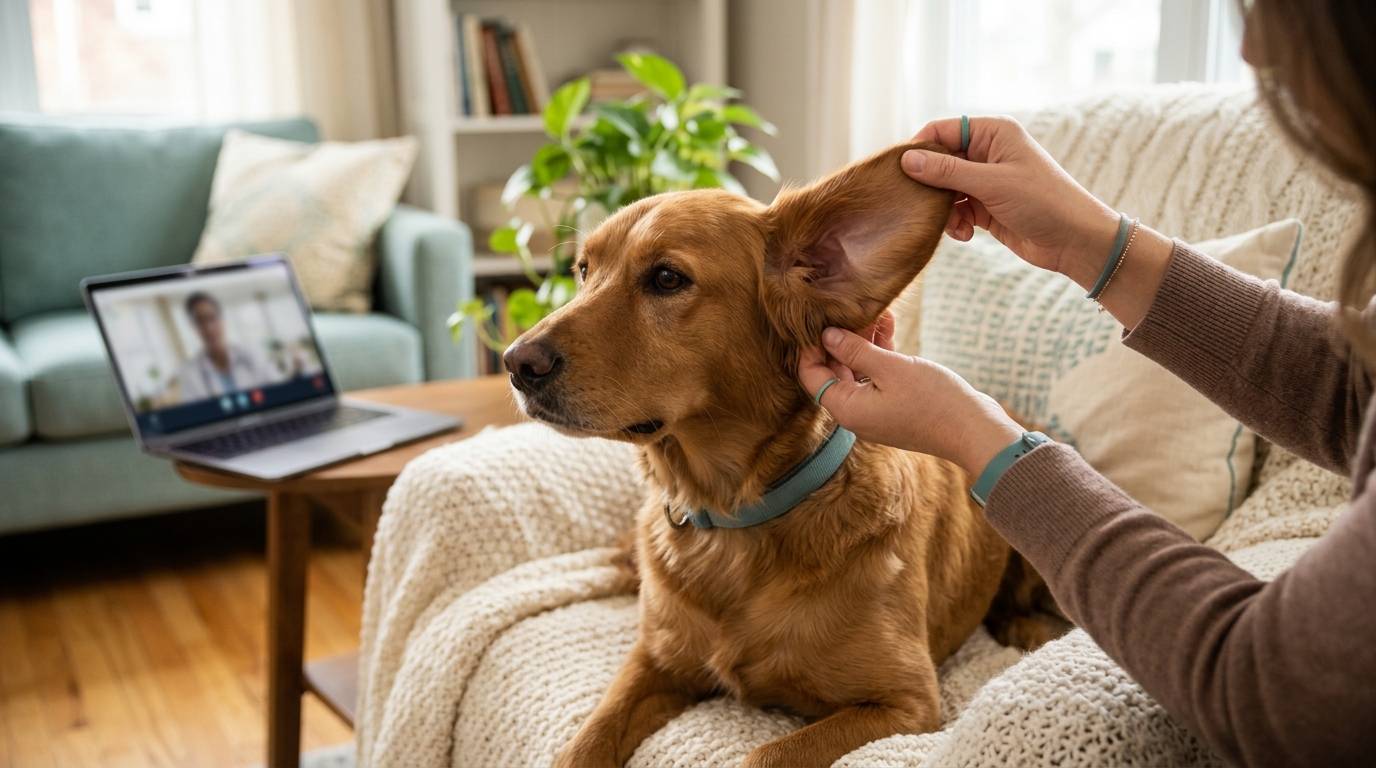
A licensed veterinarian can assess your dog's symptoms over a video visit, ask about the timeline, discharge appearance, and any recent exposure to other animals, and help determine next steps. In many cases this includes guidance on whether an in-person visit is needed for sample collection, since cytology testing does require physically obtaining a sample from the ear canal.
Treatment Differences You Should Know
Ear mites are treated with antiparasitic medication, and because mites spread so easily, other pets in the household may need treatment at the same time to prevent reinfestation. Treatment plans often extend over several weeks to fully break the mite life cycle, since eggs and immature mites can survive an initial treatment round.
Bacterial or yeast infections call for a different approach entirely. Treatment typically involves antibacterial or antifungal ear medication chosen based on what is actually driving the overgrowth, sometimes alongside a gentle ear cleaning routine to help the medication reach affected tissue. Using a mite treatment on an infection, or the reverse, will not resolve the underlying problem and may simply mask symptoms while the real issue continues underneath. If you are dealing with an infection specifically, the dog ear infection condition page outlines what treatment typically involves.
Pet parents sometimes want to try something before committing to a vet visit. It is worth knowing that dog ear infection home remedies can be limited in what they actually accomplish, and misapplying an over-the-counter product without knowing the true cause can delay proper care.
When to Get Your Dog Seen for Ear Symptoms
Persistent scratching, a strong odor, visible discharge, or repeated head shaking are reasons to have your dog evaluated rather than waiting to see if things improve on their own. Ear problems that go untreated tend to worsen, and what starts as mild irritation from mites can progress into a painful secondary infection.
A same-day online vet visit through TelaVets can help determine whether your dog's symptoms point toward mites, an infection, or something else, and whether a same-day prescription is appropriate based on the visit. You can book an appointment online for a flat $65, held over a secure Google Meet video call with a licensed veterinarian, with no memberships or hidden fees. If your dog has had ear trouble before, it is worth reading about why ear infections keep coming back, since repeat cases often point to an underlying issue that needs a longer term plan. For general upkeep once a cause has been identified, the dog ear health treatment page covers ongoing care options, and how to clean your dog's ears safely at home is a helpful next step once a vet has confirmed what you are dealing with.
Certain symptoms need in-person emergency care rather than a scheduled telehealth visit. Seek immediate veterinary attention if your dog develops a sudden head tilt, loses balance or has trouble walking, shows severe swelling around the ear, or has active bleeding from the ear canal.
Frequently Asked Questions
Can I tell ear mites from an infection just by looking in my dog's ears at home?
Visual clues offer a hint, dry, dark, crumbly debris points more toward mites, while yellow or brown discharge with a strong odor points more toward infection. However, both conditions can look similar, especially once scratching has caused additional irritation. A vet exam with an otoscope, and sometimes a cytology sample, is the reliable way to confirm which one is present.
Are ear mites contagious to other pets in the house?
Yes. Ear mites spread easily between dogs and cats through close contact, so if one pet is diagnosed, other animals in the household should be checked as well. Bacterial or yeast ear infections generally are not contagious in the same way, since they usually develop from factors specific to that individual dog's ears.
Can ear mites turn into an ear infection if left untreated?
They can. The irritation and scratching caused by mites can damage the skin lining the ear canal, creating conditions that allow yeast or bacteria to overgrow. This results in a secondary infection layered on top of the original mite problem, which is one reason ear symptoms should not be ignored for long.
What home treatments are safe to try before seeing a vet?
It is best to avoid guessing with over-the-counter mite drops or human products before knowing what is actually causing the symptoms. Applying the wrong treatment can mask signs without resolving the underlying issue and may delay proper care. A same-day telehealth exam is a more reliable way to figure out what your dog actually needs.
How long does it take to treat ear mites versus an ear infection?
Mite treatments often need to continue for several weeks to fully break the parasite's life cycle, while bacterial or yeast infections may show noticeable improvement within one to two weeks of using the correct medication. Either way, a recheck exam is often recommended to confirm the problem has fully cleared.
A Note on This Article
This article was reviewed for accuracy by Dr. Jeanne Richardson, DVM, who has 13 years of clinical veterinary experience. It is intended for general educational purposes and does not replace an individualized veterinary exam. If your dog is showing signs of ear pain, discharge, or balance changes, please have them evaluated by a veterinarian promptly.
Sources
For further reading on canine ear infections, see the Merck Veterinary Manual overview of otitis externa and the Cornell Riney Canine Health Center guide to cleaning a dog's ears.
Related Articles

Why Do Dogs Get Ear Infections? Common Causes Explained
Discover the most common causes of dog ear infections, from floppy ears and moisture to allergies and hormonal issues, and when to get help from a vet.
Signs Your Dog Has an Ear Infection (And What to Do Next)
Learn the early and advanced signs of a dog ear infection, when symptoms mean it's time to see a vet, and how a same-day virtual visit can help.

Recurring Dog Ear Infections: Why They Keep Coming Back
Learn why recurring dog ear infections happen, from allergies and anatomy to incomplete treatment, and how to finally break the cycle with proper veterinary guidance.