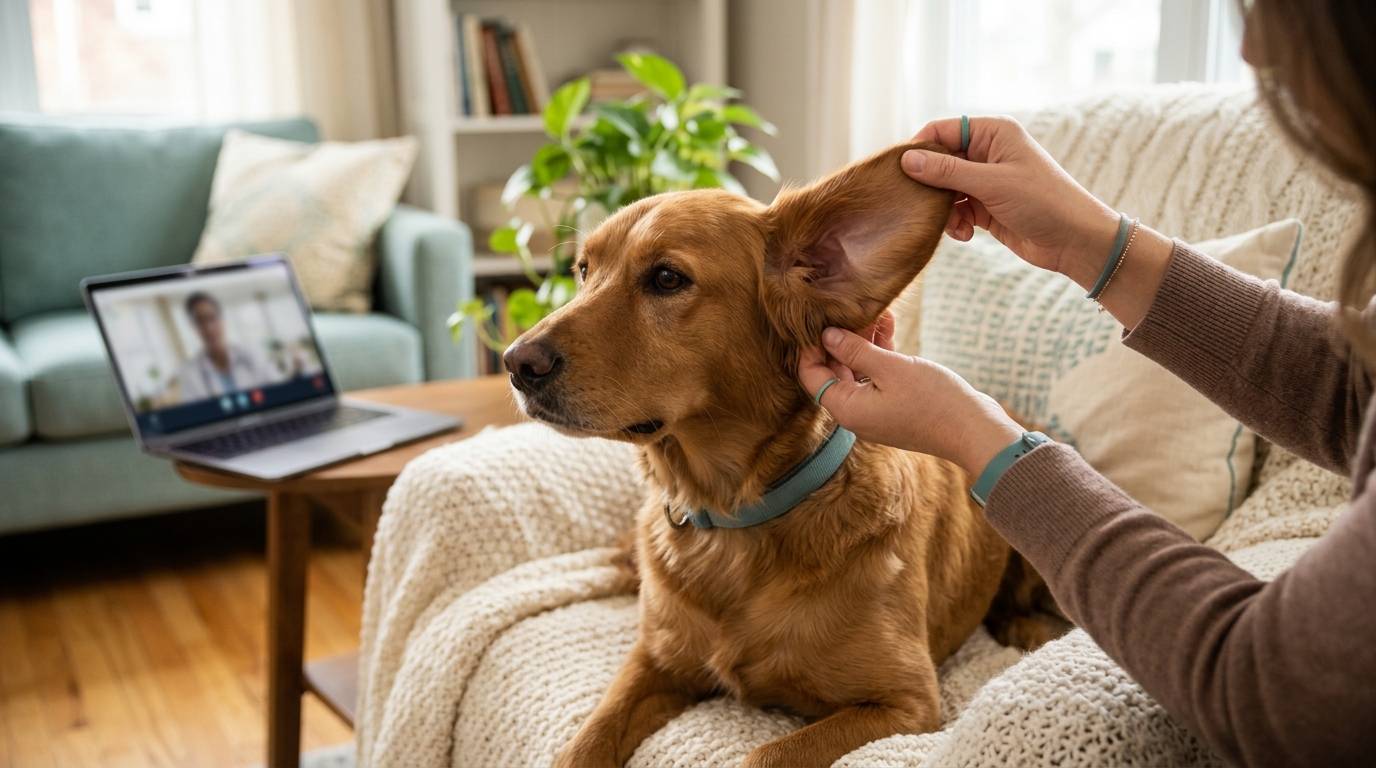
Table of Contents
Table of Contents
If your dog has been shaking its head, scratching at one ear, or you caught a whiff of something off when you scratched behind those floppy ears, you are probably wondering whether this is a real infection or just a passing itch. Dog ear infection symptoms often start small, which is exactly why so many cases get missed until the dog is clearly uncomfortable. This article walks through what to watch for, how to tell when things are progressing, and when it makes sense to get a licensed veterinarian involved rather than waiting to see what happens.
Why Ear Infection Symptoms Are Easy to Miss at First
Ear infections are among the most common reasons dogs are brought in for veterinary care, yet the early symptoms rarely look urgent. A dog scratching at an ear after a nap or shaking its head once after a walk can look like ordinary dog behavior rather than the start of otitis externa, the medical term for inflammation of the outer ear canal. Because these signs are subtle, many pet parents assume their dog is just being a dog until the scratching becomes constant or the smell becomes obvious.
The problem with waiting is that ear infections rarely stay mild on their own. What starts as slight irritation in the ear canal can progress to swelling, pain, and in some cases a more serious complication like an aural hematoma. Catching the early signs gives you a real chance to address the problem before it becomes painful for your dog or harder to treat. For a full breakdown of causes, treatment paths, and long-term management, the complete guide to dog ear infections is a good companion to this article.
Early Behavioral Signs of a Dog Ear Infection
Behavior is usually the first thing owners notice, even before they think to look inside the ear itself. A dog shaking its head repeatedly, especially after waking up or right after a walk, is one of the more reliable early clues. Some dogs tilt their head slightly to one side without a full head shake, which is easy to miss if you are not paying close attention.
Scratching that favors one ear over the other is another early sign worth noting. It is normal for dogs to scratch occasionally, but a clear preference for one side, especially if it happens several times a day, suggests something is bothering that particular ear. You might also see your dog rubbing the side of its head against furniture, carpet, or your leg, almost as if trying to reach an itch a paw cannot get to.
Mild irritability when you touch the ear or the area just below it can also show up early. A dog that normally tolerates ear rubs but suddenly pulls away or tenses up when you get near that ear is giving you useful information, even if nothing looks visibly wrong yet.
Physical Changes to Look for Inside the Ear
Once you suspect something is off, a gentle look at the ear flap and the visible part of the canal can offer more clues. Redness or swelling along the inside of the ear flap, or right at the opening of the canal, is one of the more common physical signs. The skin may look angrier than the surrounding fur-covered areas, sometimes with a slightly thickened or irritated appearance.
Discharge is another key sign. This can range from a light waxy buildup to a darker, more noticeable substance that was not there before. Color and texture vary quite a bit from dog to dog, which is part of why discharge alone is not enough to determine what is causing it. A distinct odor, often described as musty or unpleasant, frequently accompanies this discharge and is one of the more noticeable signs pet parents report to their vet.
Crusting or scabbing near the base of the ear, particularly if your dog has been scratching a lot, can also develop as the skin reacts to ongoing irritation. If you notice any of these physical changes, it is a reasonable point to start thinking about a professional opinion rather than waiting to see if it resolves on its own. TelaVets offers guidance on dog ear health as part of routine and issue-specific virtual visits.
Signs the Infection May Be Getting Worse
Some symptoms suggest the situation is advancing beyond mild irritation. Increased pain when the ear is touched, or a dog that actively resists having its head examined at all, often signals that inflammation inside the canal has increased. Head shaking that used to be occasional but is now near constant, or that does not settle down even after rest, points in the same direction.
In more advanced cases, the ear canal opening itself may look swollen, narrowed, or even appear partially closed off due to inflammation. This is different from mild redness and usually reflects a more significant infection that has been building for some time. Some dogs also show behavior changes tied to the discomfort, including reduced interest in food, general quietness, or reluctance to be touched anywhere near the head. These are not always dramatic changes, but they are worth taking seriously when paired with ear symptoms.
When Ear Symptoms Need Same-Day Attention
Most ear infections are uncomfortable rather than an emergency, but a handful of symptoms warrant faster action. If you notice any of the following, it is reasonable to seek same-day veterinary attention rather than waiting for a routine appointment.
- A sudden head tilt that does not resolve, especially with any stumbling or loss of balance
- Bleeding from the ear or a very strong, foul odor
- Visible swelling of the entire ear flap, which can indicate a blood-filled hematoma
- Signs of significant pain combined with fever, lethargy, or a dog that seems unwell overall
A sudden head tilt paired with stumbling or unusual eye movement can point to vestibular signs, which sometimes relate to inner ear involvement and generally need a prompt evaluation rather than a wait and see approach.
Why an At-Home Look Is Not the Same as a Diagnosis
It is tempting to assume that discharge color or smell alone can tell you whether you are dealing with a bacterial infection, a yeast overgrowth, or ear mites, but these causes can look remarkably similar from the outside. Bacterial and yeast infections in particular often overlap in appearance, and mite infestations can produce head shaking and scratching that mimic other causes entirely. This is part of why how to tell an ear infection apart from ear mites exists as a separate resource, since visible symptoms alone are rarely enough to distinguish between them reliably.
Guessing at the cause and treating based on that guess can delay proper care or, in some cases, make things worse if the wrong product is used. A veterinarian trained to examine the ear canal, and in many cases review a swab under a microscope, is in a much better position to identify the actual cause and recommend an appropriate treatment plan. For a full breakdown of what typically causes these infections in the first place, the common causes of dog ear infections article covers that ground in more depth. If you have already tried something at home, it is also worth reading about dog ear infection home remedies to understand what actually helps and what can make things worse.
How a Virtual Vet Visit Can Help With Ear Symptoms
If you are noticing early to moderate symptoms and want a professional opinion without waiting days for an in-person appointment, a virtual vet visit can be a practical first step. During a TelaVets appointment, a licensed veterinarian reviews your dog's history, asks about the symptoms you have observed, and in many cases visually assesses the ear over video to help determine next steps. This is not the same as an in-person otoscopic exam, but it is often enough to guide initial care and decide how urgently your dog needs to be seen in person.
TelaVets offers flat $65 virtual visits with no memberships or hidden fees, available across all 50 states with same-day, evening, and weekend appointment options. Visits happen over a secure Google Meet call with a licensed veterinarian, not a vet tech or automated chat tool. When it is medically appropriate, the vet can send a same-day prescription to your preferred pharmacy, which can help you start addressing your dog's discomfort sooner rather than waiting for the next available local appointment. For situations that require a deeper ear cleaning under sedation or a full otoscopic exam, the vet will let you know that an in-person follow-up is the right next step. You can review the full dog ear infection condition overview or book a visit directly through TelaVets online booking when you are ready.
Supporting Your Dog's Ear Health Going Forward
Once symptoms have been addressed, a few habits can help you catch problems earlier next time. Checking your dog's ears after baths, swimming, or a grooming appointment takes only a minute and can help you spot redness or odor before it becomes a bigger issue. This is especially useful for floppy-eared breeds, whose ear shape can trap moisture and reduce airflow to the canal, and for dogs with known allergies, who tend to be more prone to recurring irritation.
Learning proper technique matters too, since improper cleaning can sometimes cause more irritation than it prevents. The guide on how to clean your dog's ears safely at home walks through a gentle, vet-informed approach. And if your dog seems to get one infection after another, it is worth reading about why ear infections keep coming back, since recurring cases are often tied to an underlying issue that needs to be addressed directly rather than treated one flare-up at a time.
Frequently Asked Questions
How do I know if my dog's ear infection is bacterial or yeast?
Discharge color and smell can offer some clues. Yeast infections often produce a brown, musty-smelling discharge, while bacterial infections can look more yellow-green with a stronger odor. That said, these signs overlap enough that guessing at home is not reliable, and a proper diagnosis usually requires a physical exam or a swab reviewed by a veterinarian.
Can a dog ear infection go away on its own?
Mild irritation from trapped moisture, such as after a bath, sometimes resolves on its own once the ear dries out. A true infection, however, typically needs treatment and can worsen or become chronic if left unaddressed, so it is not something to assume will clear up without help.
Why does my dog's ear infection keep coming back?
Recurring infections are often linked to an underlying cause such as environmental or food allergies, ear shape, or chronic moisture retention rather than a new infection each time. If this sounds familiar, the article on why ear infections keep coming back covers the common underlying triggers in more detail.
Is head shaking always a sign of an ear infection?
Not always. Head shaking can also point to ear mites, foreign debris caught in the canal, water trapped after swimming or bathing, or an allergic reaction. It is a symptom worth investigating rather than an automatic confirmation of infection.
Can I check my dog's ears at home before calling a vet?
Yes, a gentle look at the visible part of the ear flap and canal opening can help you notice redness, odor, or discharge. Avoid inserting anything into the canal itself, since improper technique can cause irritation or push debris deeper. The step-by-step ear cleaning guide covers a safer approach if you want to check or maintain your dog's ears at home.
Disclaimer
This article is intended for general educational purposes and is not a substitute for an in-person veterinary examination. If your dog is showing signs of severe pain, sudden loss of balance, bleeding, or significant swelling, please seek prompt veterinary care. This article was reviewed for accuracy by Dr. Covadonga Talavera, DVM, who brings over 20 years of veterinary experience to TelaVets' educational content.
Related Articles
Why Do Dogs Get Ear Infections? Common Causes Explained
Discover the most common causes of dog ear infections, from floppy ears and moisture to allergies and hormonal issues, and when to get help from a vet.
Recurring Dog Ear Infections: Why They Keep Coming Back
Learn why recurring dog ear infections happen, from allergies and anatomy to incomplete treatment, and how to finally break the cycle with proper veterinary guidance.
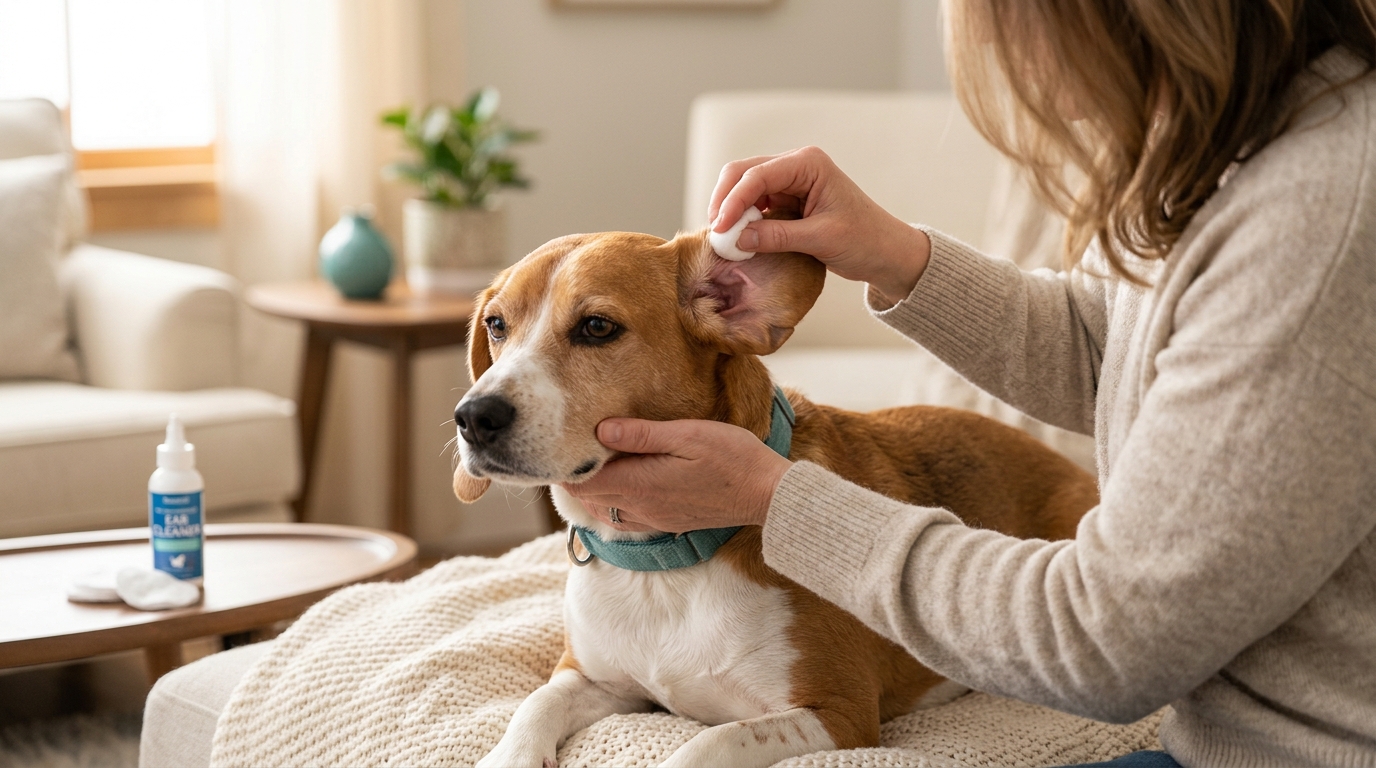
How to Clean a Dog's Ears Safely at Home: Step-by-Step Guide
Learn how to clean dog ears safely at home with vet-informed steps, supply tips, and warning signs that mean it's time to call a veterinarian.