Table of Contents
Table of Contents
A dog scratching at one ear, shaking its head at odd hours, or pulling away when you touch its ear flap sends most owners straight to the internet. If you are searching for a dog ear infection home remedy, you are probably hoping for something you can start tonight rather than wait days for a clinic opening. That instinct is understandable. Ear infections are uncomfortable for dogs and unsettling to watch, and fitting an in-person vet visit into a busy week is not always simple.
Here is the honest answer upfront: some home care steps can support comfort and help prevent future flare-ups, but they rarely resolve an active ear infection on their own. Most true infections involve bacteria, yeast, or both, and those generally need treatment matched to what is actually growing in the ear canal. Home remedies can work as a bridge or a preventive habit, but they are not a substitute for a proper look at what is going on. This article covers what may genuinely help, what to avoid, and when it is time to bring in a licensed veterinarian, including through a virtual visit.
What a Dog Ear Infection Actually Is
Veterinarians call most ear infections otitis externa, which simply means inflammation of the outer ear canal. That inflammation is usually driven by an overgrowth of bacteria, yeast, or a combination of both, often sitting on top of an underlying trigger such as allergies, trapped moisture, or an ear canal shape that traps debris more easily than others. This is a big part of why a generic remedy applied at home does not always work the way owners hope. Treating the surface symptoms without addressing what set the infection off in the first place tends to bring short-term improvement followed by another flare-up a few weeks later.
For a deeper breakdown of how these infections develop and how they are typically diagnosed and treated, the complete guide to dog ear infections covers that ground in detail. It is worth reading alongside this article if you want the full picture rather than just the home care piece.
Home Remedies That May Help With Mild Irritation or Prevention
A few at-home habits are reasonable, and in many cases genuinely useful, particularly for prevention or very mild irritation rather than an established infection. Gently drying your dog's ears after baths, swimming, or wet walks reduces the moisture that yeast and bacteria thrive on. A soft towel or a few minutes of low, cool airflow is usually enough. Avoid pushing anything deep into the canal while doing this.
Routine ear cleaning with a vet-approved solution, used as a regular preventive habit rather than treatment for an active infection, can also help keep the ear canal healthy, especially in dogs with floppy ears or a history of wax buildup. If you are not sure how to do this safely, the step-by-step routine in our guide on how to clean a dog's ears safely at home walks through the process without risking injury to the canal or eardrum.
For breeds with heavy hair around the ear opening, keeping that hair trimmed can reduce trapped moisture and debris. And because allergies are such a common underlying driver of recurring ear issues, working with a veterinarian on diet or environmental allergy management is often more useful long-term than any single ear remedy. None of these steps treat an infection that has already taken hold, but they do support an ear environment that is less likely to develop one in the first place.
Popular Home Remedies That Are Risky or Not Backed by Evidence
Search results and pet forums are full of suggestions that sound harmless but can make things worse. Apple cider vinegar rinses are one of the most common. Diluted vinegar can sting already inflamed skin, and if the eardrum is compromised, which is not something you can check at home, it can cause real discomfort or further irritation.
Hydrogen peroxide is another frequent suggestion, but it is generally too harsh for the delicate skin of the ear canal and can damage healthy tissue, sometimes delaying healing rather than speeding it up. Essential oils, including tea tree oil, show up on some natural remedy lists as well, but tea tree oil in particular can be toxic to dogs and should never be placed in the ear canal or used near the face.
Over the counter human ear drops are formulated for human skin and human ear conditions, not for canine ear pH or the specific bacteria and yeast that commonly affect dogs, so they are unlikely to help and may cause unnecessary irritation. Cotton swabs deserve a separate mention. Pushing a swab into the canal can pack debris and discharge deeper rather than removing it, and it carries real risk of injuring the eardrum, especially if your dog moves suddenly during the process.
Why Home Remedies Alone Often Fall Short
The core issue is that bacterial and yeast ear infections usually respond best to medication chosen based on what is actually present in the ear, not a generic solution applied at home. Using the wrong remedy can mask symptoms temporarily, giving the impression of improvement while the underlying infection keeps progressing underneath.
This is especially true for dogs dealing with recurring ear infections. When the same ear keeps flaring up over weeks or months, there is almost always an underlying condition, often allergies, that a home remedy simply cannot address. Understanding why dogs get ear infections in the first place makes it much clearer why treating the symptom in isolation rarely leads to lasting relief.
Signs It Is Time to Stop Trying Home Care and See a Vet
A short trial of gentle drying or preventive cleaning is reasonable, but certain signs mean it is time to stop experimenting and get a professional opinion. Watch for the following:
- A strong odor, dark or unusual discharge, or redness that is getting worse rather than better after several days of home care
- Visible pain when the ear is touched, or a head tilt that was not there before
- No improvement within 48 to 72 hours of starting home comfort measures
- The same ear becoming infected repeatedly over a period of weeks or months
If you are still unsure whether what you are seeing qualifies as an infection at all, our article on signs your dog has an ear infection can help you match up what you are noticing with common patterns. It is also worth ruling out parasites, since the home care approach differs. The comparison in ear mites versus an infection explains how the two commonly get confused.
How an Online Vet Visit Helps With Ear Infections
This is exactly the kind of situation where a virtual vet visit can save time without skipping proper care. A licensed veterinarian can review your dog's history and symptoms over video, ask about discharge, odor, behavior changes, and how long things have been going on, and help you figure out the right next step. In many straightforward cases, that includes a same-day prescription. In cases where the ear canal really needs to be visualized with an otoscope, or where the eardrum's integrity is in question, the vet will let you know that an in-person exam is the safer path rather than guessing from a description alone.
TelaVets offers flat $65 video visits with licensed veterinarians, available in all 50 states, with no membership required and no pressure to commit beyond a single appointment. Same-day, evening, and weekend slots are often available, which matters when an irritated ear does not wait for convenient office hours. If you are trying to decide whether to keep experimenting at home or get an actual assessment, a quick visit through the TelaVets booking page is often faster than it sounds, and it can settle the question before you spend more time or money on remedies that may not help. For dogs with a pattern of ear issues, it is also worth reviewing the broader condition information on dog ear infections or the general dog ear health resources to understand what ongoing care might look like.
Preventing Future Ear Infections at Home
Once an active infection has been addressed, the most useful thing you can do at home is build consistent habits rather than reach for remedies during the next flare-up. Regular drying after water exposure and a gentle, consistent cleaning routine using a vet-approved solution both reduce the chances of recurrence over time. Managing allergies, whether through diet changes, environmental adjustments, or medication your vet recommends, addresses one of the most common root causes of chronic otitis. For a full walkthrough of a safe cleaning routine you can fold into regular grooming, see our guide on how to clean a dog's ears safely at home.
Frequently Asked Questions
Can I treat my dog's ear infection at home without a vet?
Mild irritation from moisture or minor debris sometimes improves with gentle drying and preventive cleaning. But a true bacterial or yeast infection usually needs a proper diagnosis and prescription treatment to fully resolve, since home remedies do not target the specific organisms involved.
Is apple cider vinegar safe for dog ear infections?
It is not generally recommended. Diluted vinegar can sting inflamed or broken skin, and if the eardrum is not intact, which is not something you can check without an otoscope, it may worsen irritation rather than help.
How long can I try home remedies before seeing a vet?
A reasonable window is 48 to 72 hours of gentle, appropriate home care. If you notice worsening odor, pain, discharge, or a head tilt before that window is up, it is best to have a veterinarian take a look sooner.
What can I safely use to clean my dog's ears at home?
A vet-approved ear cleaning solution, used gently and without inserting anything deep into the canal, is the safest option for routine maintenance. Our step-by-step ear cleaning guide walks through the full process.
Can an online vet actually help with an ear infection?
Yes, in many cases. A video visit allows a licensed veterinarian to discuss symptoms and history in detail and often leads to a same-day prescription when appropriate. If the situation calls for a hands-on otoscopic exam, the vet will let you know so you can arrange in-person care with confidence.
This article is provided for general educational purposes and does not replace an individualized veterinary examination. If your dog is in significant pain, has a sudden head tilt, loss of balance, or a rapidly worsening ear, seek prompt veterinary attention. This content has been reviewed by Dr. Julia Campbell, DVM, who has 14 years of clinical veterinary experience.
Related Articles
Why Do Dogs Get Ear Infections? Common Causes Explained
Discover the most common causes of dog ear infections, from floppy ears and moisture to allergies and hormonal issues, and when to get help from a vet.
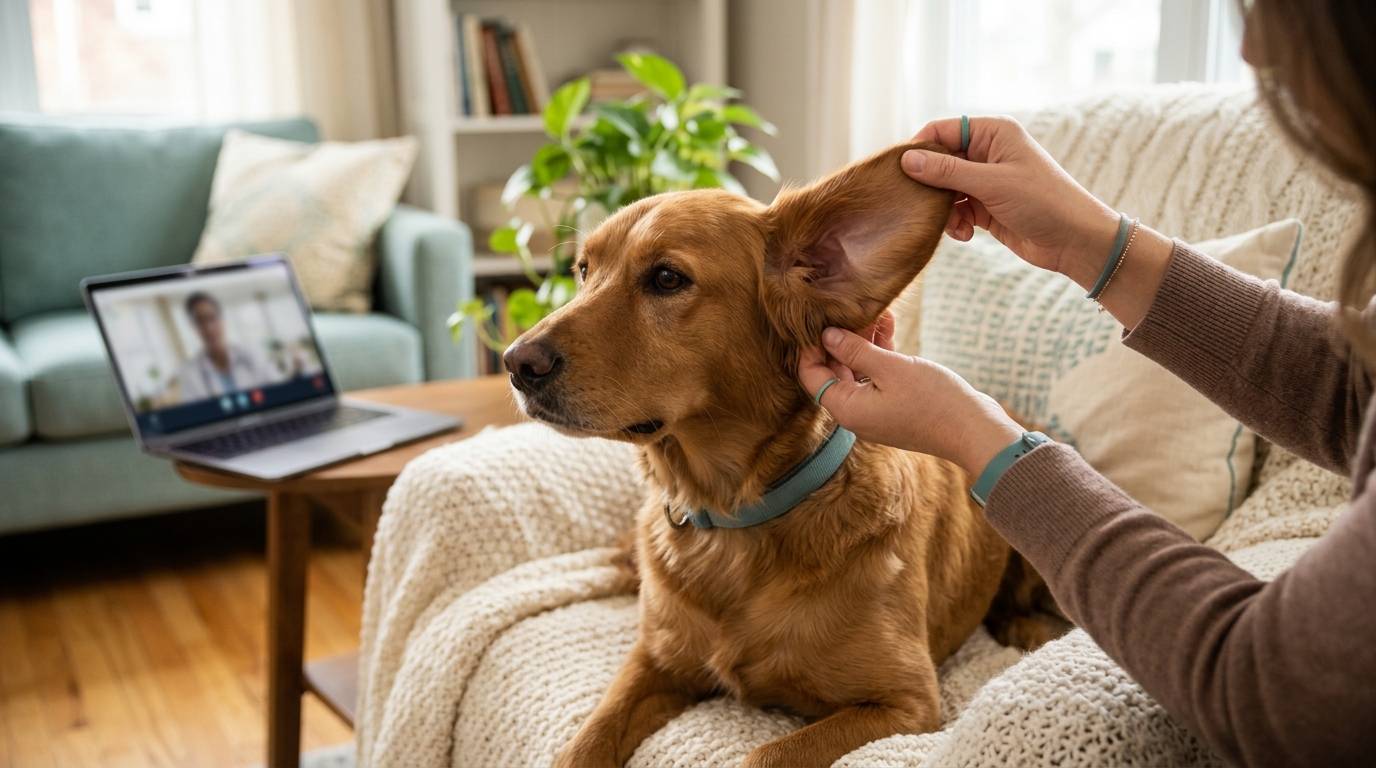
Signs Your Dog Has an Ear Infection (And What to Do Next)
Learn the early and advanced signs of a dog ear infection, when symptoms mean it's time to see a vet, and how a same-day virtual visit can help.
Recurring Dog Ear Infections: Why They Keep Coming Back
Learn why recurring dog ear infections happen, from allergies and anatomy to incomplete treatment, and how to finally break the cycle with proper veterinary guidance.