
Table of Contents
Table of Contents
Ear infections are one of the most common reasons pet parents book a veterinary visit, and one of the most misunderstood. Many owners assume an infection just happens out of nowhere, but in most cases something specific tipped the ear canal environment out of balance. Understanding the causes of dog ear infections, rather than only treating the flare-up in front of you, is what actually helps prevent the next one.
This article focuses on why ear infections develop in dogs in the first place. If you are trying to figure out whether your dog is showing signs of one right now, our article on signs your dog has an ear infection covers that in detail. For a full overview of causes, treatment, and when to seek care, see our parent guide, Dog Ear Infections: Causes, Symptoms, Treatment & When to See a Vet Online.
What Is Happening Inside an Infected Ear
A dog's ear canal naturally hosts small populations of yeast and bacteria alongside healthy skin cells and wax produced by ceruminous glands. In a normal ear, this environment stays balanced. Airflow keeps the canal reasonably dry, the skin barrier stays intact, and the resident microorganisms never grow past a manageable level.
An infection, medically known as otitis externa, develops when something disrupts that balance and lets yeast or bacteria multiply unchecked. That disruption can come from several directions: excess moisture, inflamed skin from an allergy, an anatomical feature that limits airflow, or a foreign object irritating the canal lining. The infection itself is often a downstream result rather than the root cause, which is why the same dog can develop repeat infections if the underlying trigger never gets addressed.
Why Some Dogs Are More Prone Than Others: Ear Shape and Anatomy
Ear shape plays a real role in how much airflow reaches the canal. Breeds with long, floppy ears, such as Cocker Spaniels and Basset Hounds, tend to trap warmth and moisture against the canal opening, which creates conditions that favor yeast overgrowth. Dogs with narrow or heavily haired ear canals, including many Poodles and Poodle mixes, run into a similar issue because reduced airflow keeps the canal warmer and damper than it would otherwise be.
It is worth being clear that breed predisposition is a risk factor, not a guarantee. Plenty of floppy-eared dogs never develop chronic ear problems, and upright-eared breeds can absolutely get infections too. Anatomy shifts the odds, but it rarely acts alone.
Moisture and Water Exposure
Water is one of the most straightforward contributors. Dogs that swim regularly, get bathed often, or live in humid climates are more likely to have residual moisture sitting in the ear canal after exposure. That damp environment gives yeast and bacteria exactly what they need to multiply.
Drying the ears gently after swimming or bathing, and avoiding letting water pool in the canal during baths, meaningfully lowers this risk. If you are unsure how to dry or maintain your dog's ears without causing irritation, our guide on how to clean your dog's ears safely at home walks through the process step by step.
Allergies as an Underlying Trigger
Allergies, whether triggered by food or environmental factors like pollen and dust mites, are among the most common root causes of ear infections in dogs. Allergic reactions cause inflammation in the skin, and the skin lining the ear canal is not exempt. That inflammation changes wax production and alters the canal's normal defenses, making it easier for yeast and bacteria to take hold.
Dogs with chronic or recurring ear infections very often have an allergy component driving the pattern, even if the allergy itself was never formally diagnosed. If your dog also deals with itchy skin, paw licking, or recurrent skin issues alongside ear problems, it is worth discussing allergy management with a veterinarian. Our Dog Allergy Care service can help identify and manage this piece of the puzzle.
Ear Mites, Foreign Bodies, and Other Physical Irritants
Not every ear problem starts with yeast or bacteria. Ear mites are a common cause in young dogs and newly adopted dogs, particularly those coming from shelters or multi-dog environments. Mites cause intense itching and irritation that can lead to secondary infection if left untreated. Because the two conditions can look similar at first glance, many owners find it useful to read telling ear mites apart from an ear infection before assuming which one they are dealing with.
Foreign material is another direct cause worth watching for, especially in dogs who spend time in tall grass or wooded areas. Foxtails, grass seeds, and other debris can lodge in the ear canal and cause sudden, intense irritation. This type of cause usually requires an in-person exam for removal rather than something resolved at home. On the flip side, cleaning that is too frequent or done with the wrong products can also irritate ear tissue and contribute to inflammation, so more is not always better when it comes to at-home care.
Hormonal and Underlying Health Conditions
Some ear infections trace back to systemic health issues rather than anything happening locally in the ear. Hypothyroidism, for example, can alter skin health and wax production throughout the body, including inside the ear canal, making infections more likely and harder to fully resolve. Autoimmune skin conditions can have a similar effect by weakening the skin's normal protective barrier.
When a dog experiences ear infections that are frequent, severe, or resistant to typical treatment, it is reasonable to ask whether an underlying hormonal or immune condition might be contributing. This is often an area where veterinary dermatology expertise becomes valuable, since these cases can require bloodwork or further testing beyond what the ear alone can reveal.
When Ear Infection Causes Overlap with Recurring Cases
Many of the causes described here, allergies, anatomy, and hormonal imbalances, are also the exact reasons infections keep coming back in some dogs. A single round of ear drops can clear an active infection, but if the underlying trigger is still present, the cycle tends to repeat. Identifying and addressing the root cause is what actually breaks that pattern, rather than treating each flare-up as an isolated event.
If your dog has already had multiple infections in the same ear or in both ears over time, our article on why recurring dog ear infections keep coming back goes deeper into how vets approach these repeat cases and what long-term management can look like.
How a Veterinarian Helps Identify the Real Cause
Because so many different factors can contribute to an ear infection, pinpointing the actual cause usually requires a professional exam rather than guesswork at home. A veterinarian can examine the ear canal, ask about your dog's history with swimming, allergies, or previous infections, and look for patterns that point toward a specific trigger.
A licensed veterinarian can walk through your dog's history, look at the ear during a video visit, and help determine reasonable next steps, including whether a same-day prescription is appropriate. TelaVets offers online veterinary visits for a flat $65 with no memberships or hidden fees, available same-day, at night, and on weekends across all 50 states. If you suspect your dog has an active infection rather than simply trying to understand a past one, booking a visit is a practical way to get guidance without waiting for an in-person opening. You can review options on our Dog Ear Health page or book directly through TelaVets online booking.
When to Seek Prompt Veterinary Care
Understanding the cause is valuable, but certain signs mean you should not wait to get your dog seen. These include a sudden head tilt, signs of severe pain when the ear is touched, a strong foul odor, or any bleeding from the canal. Persistent scratching or head shaking that does not improve within a day or two also warrants an evaluation rather than continued at-home monitoring.
This article is not meant to replace a hands-on exam, particularly if a foreign object like a foxtail is suspected, since those cases typically require physical removal that cannot be assessed through video alone.
Frequently Asked Questions
Can allergies really cause ear infections in dogs?
Yes. Food allergies and environmental allergies are among the most common underlying triggers because they inflame the skin lining the ear canal, changing wax production and making infection more likely to develop.
Are some dog breeds more likely to get ear infections?
Breeds with floppy ears or hairy ear canals, such as Cocker Spaniels, Basset Hounds, and Poodles, tend to have reduced airflow and are statistically more prone to infections. That said, any dog, regardless of breed, can develop one.
Can swimming cause a dog ear infection?
Frequent water exposure without proper drying afterward can leave the ear canal damp for extended periods, creating conditions where yeast and bacteria multiply more easily than in a dry canal.
Is it my fault if my dog keeps getting ear infections?
Not necessarily. Recurring infections are often tied to an underlying cause such as allergies or a hormonal imbalance rather than anything the owner did wrong, though consistent, gentle ear care still helps reduce risk.
Can I figure out the cause of my dog's ear infection at home?
Some clues, like swimming habits, known allergies, or breed tendencies, offer useful hints, but a veterinarian typically needs to examine the ear canal directly and review your dog's history to confirm the actual underlying cause.
This article is intended for general educational purposes and does not replace an individualized veterinary exam. If your dog is showing signs of pain, a head tilt, bleeding, or a foreign object in the ear, please seek prompt veterinary attention.
Reviewed for veterinary accuracy by Dr. Julia Campbell, DVM, with 14 years of clinical experience.
Related Articles
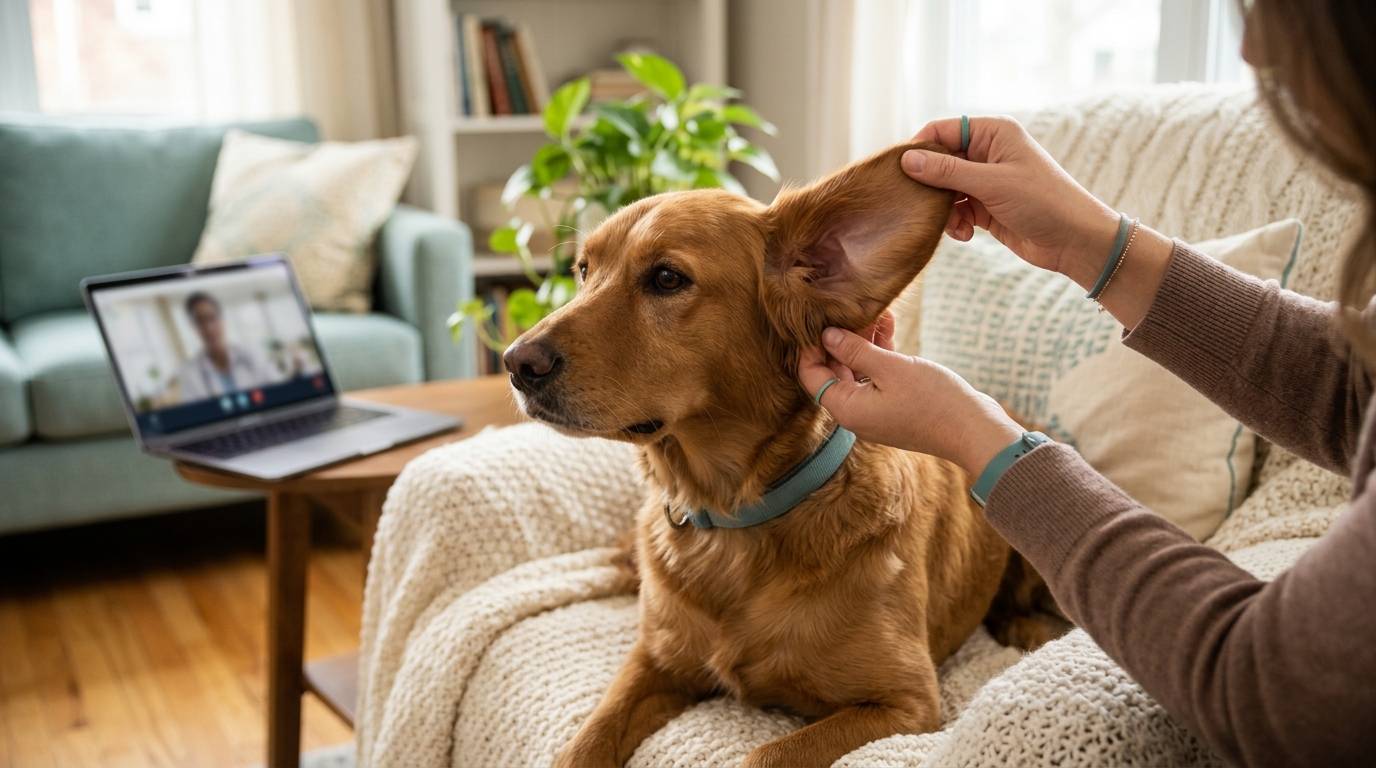
Signs Your Dog Has an Ear Infection (And What to Do Next)
Learn the early and advanced signs of a dog ear infection, when symptoms mean it's time to see a vet, and how a same-day virtual visit can help.

Recurring Dog Ear Infections: Why They Keep Coming Back
Learn why recurring dog ear infections happen, from allergies and anatomy to incomplete treatment, and how to finally break the cycle with proper veterinary guidance.
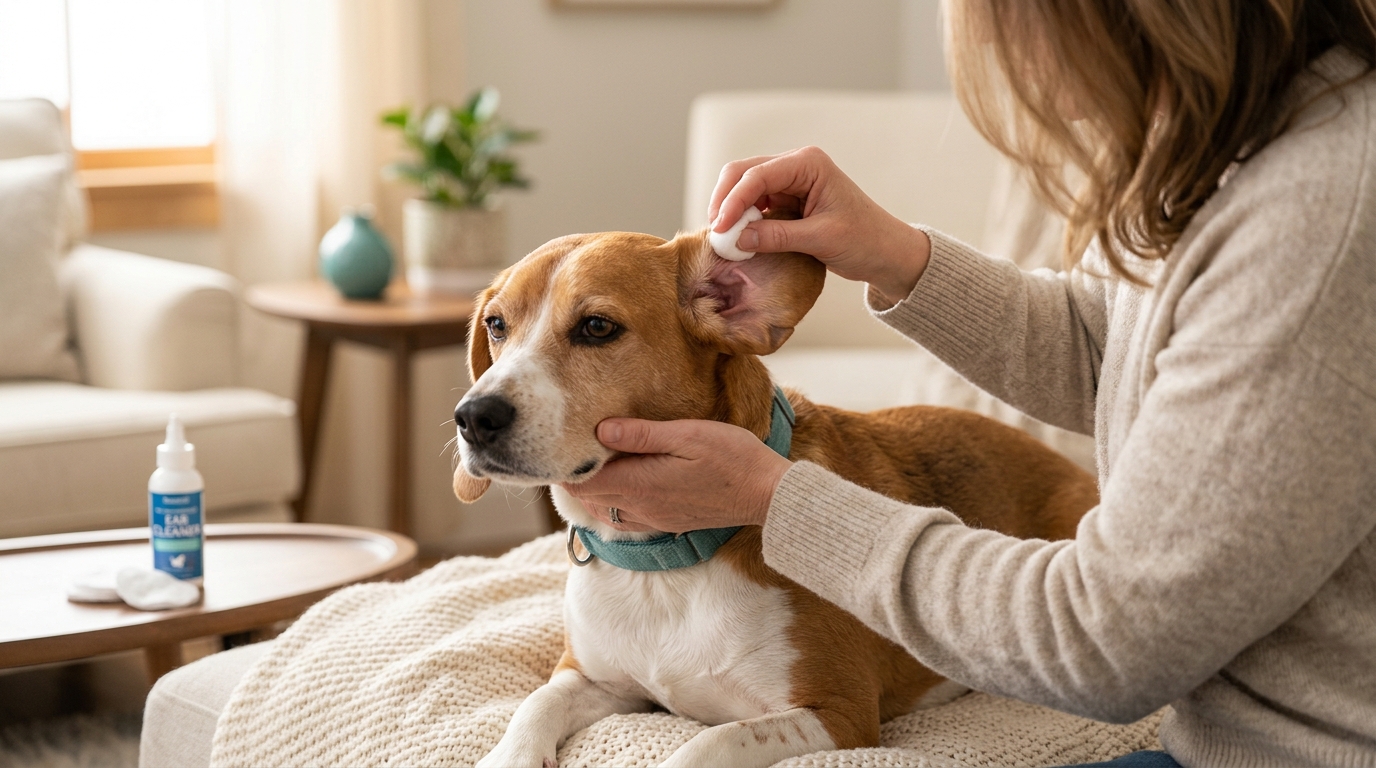
How to Clean a Dog's Ears Safely at Home: Step-by-Step Guide
Learn how to clean dog ears safely at home with vet-informed steps, supply tips, and warning signs that mean it's time to call a veterinarian.