Changes in home or routine
Moving, visitors, building work, or a different schedule may unsettle a cat. Note what changed before the behavior began.
Is your cat hiding more, overgrooming, or struggling with changes at home? Talk with a licensed vet about cat anxiety treatment options in a $65 online consultation. Discuss possible triggers, practical changes, and whether a medical assessment is needed.
Book Your ConsultationSame-day appointments when available. Check times in your state.
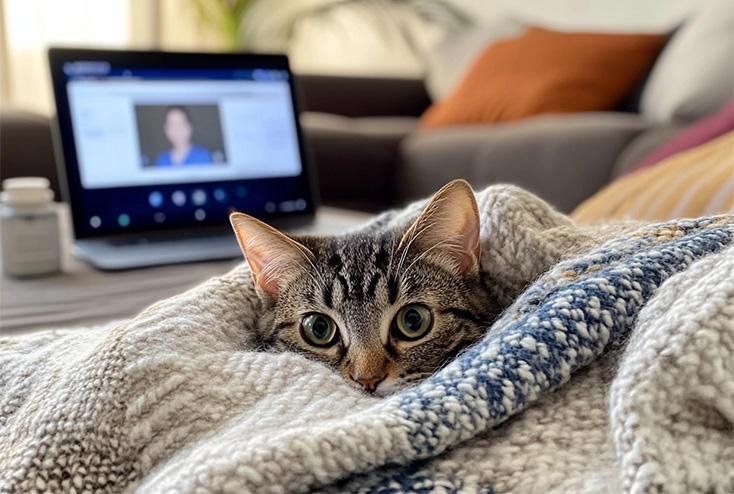
Fear and stress can change how a cat behaves, but pain or illness may look similar. Tell our vet what is different from your cat’s usual routine and when the change happens.
Understanding the setting matters as much as the behavior itself. Our vet can review possible triggers and consider whether an underlying medical concern needs investigation.
Moving, visitors, building work, or a different schedule may unsettle a cat. Note what changed before the behavior began.
Competition for resting places, food, or litter boxes may create tension. Cats do not have to fight openly for conflict to affect their behavior.
Travel, handling, and unfamiliar sounds can trigger fear. A tailored plan can work toward calmer responses without forcing exposure.
A new behavior is not automatically anxiety. Pain and other health problems may need an examination before a behavior treatment plan is chosen.
Anxiety care often combines changes at home with gradual behavior work. Our vet can help review the pattern, discuss realistic goals, and consider whether medication or a referral may be useful.
Describe what happens before, during, and after an episode. Short videos and a simple behavior diary can help show patterns without provoking your cat.
Discuss quiet hiding places, predictable routines, and separate access to food, water, and litter boxes. Suggestions should fit your cat and the space you share.
Ask about reward-based steps and gradual exposure at a comfortable pace. Avoid punishment or forcing your cat into a situation that causes fear.
For some cats, medication supports a broader behavior plan. Persistent or severe concerns may need an in-person assessment or a veterinary behaviorist.
Looking for cat anxiety medication?
A vet may consider medication for selected cases, alongside environmental and behavior changes. It is not an instant fix or suitable for every cat. Prescribing depends on medical history, clinical suitability, and eligibility.
Book Your ConsultationSelect your state and choose an available appointment. Your online consultation costs $65.
Meet our vet through Google Meet on your phone or computer with your cat nearby. Share the symptoms, medical history and current medications.
Our vet discusses suitable next steps, what to watch for and whether an examination or tests are needed.
Where a prescription is appropriate and eligible, our vet can discuss how to arrange it. Medication is purchased separately.
Keep a diary of the behavior, possible triggers, appetite, and litter box habits. Note recent household changes and interactions with other pets. Record a short video only when safe; do not deliberately trigger fear for the appointment.
Video visits from your phone · first booking $10 off with
Go to an emergency veterinary hospital immediately. These signs need urgent medical care, even if your cat has a history of anxiety.
Arrange prompt veterinary assessment to consider pain and illness as well as behavior. Do not punish, corner, or force handling of a frightened cat. Ask the clinic how to bring your cat safely.
Keep your cat nearby while you speak with our vet from home. If clinic care is needed, you will know why.
Speak directly with a licensed veterinarian about the changes you are seeing.
Your consultation costs $65 with no membership. Medication, clinic visits and outside tests are separate.
Check appointment times in your state and choose one that works for you.
Leave the conversation with recommended next steps and a clearer understanding of when your cat needs clinic care.
Existing TelaVets Google reviews about the consultation experience. These reviews are not specific to cat anxiety.
“We are so thankful for this service. We love Dr Courtney. I have such a peace now that I didn't have before. I feel like my fur baby, Nita, is going to finally start getting better. Thank you 🙏🏼”
“This was the most informative vet visit I've had for my fur baby! The process was seamless and the outcome was beyond my expectations!! Highly recommended!!”
An online vet can discuss behavior patterns, household triggers, and options for support. A medical exam may be needed to rule out pain or illness, especially if the change is sudden.
Hiding, appetite changes, and reduced interaction can occur with either. Timing and triggers offer clues but do not confirm a diagnosis. Share new symptoms and your cat’s medical history so the vet can recommend an assessment.
Medication may be possible when clinically appropriate and permitted. Some cats need an in-person assessment first. The vet considers health history, current medicines, and the overall behavior plan rather than prescribing for every behavior change.
Stress can contribute to overgrooming, but itching and pain must also be considered. Discuss any bald patches or thinning fur rather than assuming the cause is behavioral.
A predictable routine, quiet retreat, and easy access to separate resources may help. Use rewards and let your cat choose when to approach. A vet can help tailor changes to the triggers you describe.
Progress depends on the cause, the cat, and the plan. Behavior changes take practice, and some medicines take several weeks to show an effect. Ask about monitoring, follow-up, and when a lack of progress needs reassessment.
Prepare a behavior diary, videos recorded safely, a medication list, and details of recent home changes. Note appetite, litter box habits, and any signs of pain. Explain your goals, such as calmer handling or fewer conflicts between cats.
Expert veterinary care, delivered fast—compassionate, convenient, and just a click away.

19+ years experience

20+ years experience

14+ years experience

13+ years experience

14+ years experience

17+ years experience

25+ years experience

16+ years experience

16+ years experience
19+ years experience
20+ years experience
14+ years experience
13+ years experience
14+ years experience
17+ years experience
25+ years experience
16+ years experience
16+ years experience