Table of Contents
Table of Contents
Short Answer
Most minor paw bleeding, like a small nick from gravel or a light nail scrape, can be managed at home with clean pressure and does not require a rush to the vet. A bleeding paw becomes an emergency when the bleeding will not slow after 10 to 15 minutes of firm pressure, when the wound is deep enough to expose tissue or bone, when there is an embedded object, or when your dog shows pale gums, weakness, or wobbliness. If you are genuinely unsure how bad it is, a same-day vet visit, whether virtual or in person, is the safer call than waiting it out.
Medically reviewed by Dr. Julia, DVM, who has 14 years of clinical veterinary experience.
How to Tell If a Bleeding Paw Is a True Emergency
Owners often try to judge severity by staring at the amount of blood on the floor, but that alone is not a reliable measure. A dog's paw pad is packed with small blood vessels, so even a shallow cut can look dramatic on light-colored flooring, while a deeper puncture wound might ooze quietly and seem less urgent than it actually is. A more useful approach is to look at three things together: how much and how fast the dog is bleeding, how deep the wound appears, and how the dog is behaving.
Steady dripping that slows within a few minutes of pressure is different from blood that pools on the floor or spurts with each heartbeat. Pooling or spurting suggests a larger vessel is involved and needs prompt attention. Behavior matters just as much as the wound itself. A dog who is unusually quiet, restless, panting heavily, or unsteady on their feet may be in pain or early shock, even if the wound itself does not look enormous. For the full picture on why paws bleed in the first place, our parent guide, Dog Paws Are Bleeding: Causes, First Aid, and When to See a Vet, covers causes and background in more depth.
Red Flags That Mean You Should Rush to a Vet
Certain signs consistently separate a manageable paw injury from one that needs urgent veterinary hands on the wound. If you notice any of the following, treat it as a reason to seek same-day care rather than waiting to see if things improve overnight.
- Bleeding that does not slow down after 10 to 15 minutes of firm, direct pressure with a clean towel or gauze
- A wound deep enough that you can see fat, muscle, tendon, or bone, or one that keeps reopening despite being cleaned
- An object such as glass, metal, gravel, or a thorn still lodged in the pad or between the toes
- Pale or white gums, rapid or shallow breathing, or a dog that seems weak, dizzy, or collapses
- A large or rapidly spreading pool of blood rather than a small trickle or a few drops
- A suspected bite wound, especially from an unknown dog or a wild animal, due to infection and disease risk
Any one of these on its own justifies urgent evaluation. If more than one is present, especially gum color and behavior changes together, that points toward significant blood loss and possible shock, which needs immediate attention.
I always tell owners not to wait and watch when there is a spreading pool of blood or gums that look pale. Those are signs the body is struggling to compensate, and by the time a dog looks visibly weak, they have already lost a meaningful amount of blood.
Situations That Usually Are Not Emergencies
Not every bleeding paw needs an emergency room. A small nick from a nail trim or a minor scrape picked up on rough pavement often stops bleeding on its own within a few minutes of light pressure. If your dog is walking normally, eating, drinking, and acting like themselves otherwise, that is a good sign the injury is superficial. A cracked or split nail that bleeds lightly and responds to pressure and a clean temporary wrap usually falls into this category too, though a quick check-in with a vet is still worthwhile to confirm the nail does not need trimming or further care. Our dedicated guide on a bleeding or broken dog nail walks through nail-specific care in more detail.
The key distinction is trend, not just appearance. If bleeding is slowing and your dog seems comfortable, you likely have time to clean the area and monitor. If bleeding is holding steady or getting worse, or your dog is guarding the paw and refusing to bear weight at all, that shifts the picture toward needing professional evaluation sooner rather than later.
What Vets Look for During a Paw Bleeding Evaluation
When a vet examines a bleeding paw, they are not just checking the surface. They look at wound depth and how contaminated it is with dirt, gravel, or debris, and they check whether the injury involves tendons or nerves that would affect how the foot moves. Vaccination history matters too, since puncture wounds carry a tetanus risk that needs to be factored into the treatment plan. Gum color, heart rate, and overall alertness are checked as a quick way to screen for shock, even in wounds that look minor at first glance.
A licensed veterinarian can often do a meaningful first pass of this triage over video. During a virtual visit, a vet can watch how your dog is walking, ask you to describe or show the wound closely, check gum color if you can get a clear angle, and use your answers about behavior to judge urgency. This does not replace hands-on care for serious wounds, but it is genuinely useful for deciding whether you need to go in tonight or whether home care and a follow-up plan is reasonable.
First Aid to Do While You Decide
While you are figuring out how serious the situation is, a few simple steps buy you time and reduce blood loss. Apply a clean towel, gauze pad, or folded t-shirt directly to the wound and hold it there with firm, steady pressure rather than repeatedly lifting it to check. Keep your dog calm and limit walking as much as possible, since movement increases blood flow to the paw and can slow clotting. If there is an object embedded deeply in the pad, resist the urge to pull it out yourself, since it may be acting as a partial plug against a larger vessel, and removing it can trigger heavier bleeding. For a full walkthrough of cleaning, bandaging, and monitoring technique, see our step-by-step first aid for a bleeding paw guide.
When an Online Vet Visit Makes Sense vs When to Go In Person
A virtual vet visit is a good fit when the bleeding has slowed with pressure, your dog is alert and behaving close to normal, and you mainly need guidance on wound cleaning, bandaging, infection risk, or whether antibiotics are appropriate. A licensed vet can assess the wound by video, walk you through at-home care, and issue a same-day prescription when medically indicated, all without loading an anxious dog into the car. TelaVets offers same-day virtual appointments with licensed veterinarians across all 50 states for a flat $65 per visit, with no memberships or hidden fees, which makes this an accessible option for a quick professional opinion. You can book a same-day virtual visit directly when you need that guidance fast.
That said, a video call is not the right tool for every situation. Deep wounds, bleeding that will not stop after firm pressure, an embedded object, or any sign of shock such as pale gums or collapse need same-day in-person or emergency veterinary care. In those cases, a virtual visit should not delay getting your dog physically seen. When it is unclear which category you are in, starting with a virtual consult can still help, since a vet can quickly tell you if what you are seeing warrants an immediate trip to a clinic.
Video visits work best for the cases where the bleeding has already slowed and the dog is behaving normally. If an owner tells me the bleeding restarted twice or their dog will not put weight on the foot at all, I am usually recommending in-person care that same day rather than continuing over video.
Underlying Causes That Sometimes Trigger Emergency Bleeding
Some bleeding paws are the result of a single obvious event, like stepping on glass, but others build up from an ongoing condition. Chronic allergy-related skin issues can leave paws dry, cracked, and prone to licking, which sometimes progresses into open sores that bleed more heavily than the original irritation would suggest. Dogs with arthritis and joint pain often change how they walk to protect sore joints, which can increase missteps on uneven or rough terrain and lead to cuts that a healthier gait might have avoided. Anxiety-driven paw licking or chewing, related to anxiety in dogs, can also turn a small irritation into a persistent, bleeding sore over time. If your dog's paw bleeding keeps recurring rather than being a one-time accident, our guide on why a paw keeps bleeding after walks can help you figure out whether an underlying condition is contributing.
Frequently Asked Questions
How much bleeding from a dog's paw is too much?
There is no exact volume that defines "too much." What matters more is the trend: steady dripping that will not stop after 10 to 15 minutes of firm pressure, or blood that is pooling or spreading quickly, are both signs to seek urgent care rather than trying to measure the amount.
Can a dog bleed to death from a cut paw?
It is rare, but possible if a significant vessel is severed and the bleeding is left uncontrolled for a long period. This is exactly why bleeding that does not respond to firm pressure within a reasonable time should be treated as an emergency rather than something to wait out overnight.
Should I bandage a bleeding dog paw before going to the vet?
Yes, a clean gauze pad or towel held with firm pressure, then wrapped snugly but not tightly, helps control bleeding on the way to care. Avoid anything that acts like a tourniquet, since cutting off circulation entirely can cause more harm than the original wound.
Can I treat my dog's bleeding paw with a virtual vet visit instead of an emergency room?
For minor to moderate wounds, yes, a licensed vet can triage by video, guide you through wound care, and prescribe antibiotics if appropriate. Deep wounds, bleeding that will not stop, or signs of shock need same-day in-person or emergency care, not a video call alone.
How do I know if my dog is going into shock from blood loss?
Watch for pale or white gums, rapid or shallow breathing, unusual weakness, disorientation, or collapse. These signs mean the body is struggling to compensate for blood loss and your dog needs emergency veterinary attention right away.
This article is for general educational purposes and is not a substitute for hands-on emergency veterinary care. If your dog is showing true emergency signs such as uncontrolled bleeding, pale gums, or collapse, seek immediate in-person veterinary or emergency care rather than relying solely on home guidance or a virtual consult.
For prevention going forward, it is worth reading about protecting your dog's paws from future injuries, and if the current wound turns out to be a pad laceration, our guide on the dog paw pad cut recovery timeline can help you understand what healing should look like over the coming days.
Related Articles
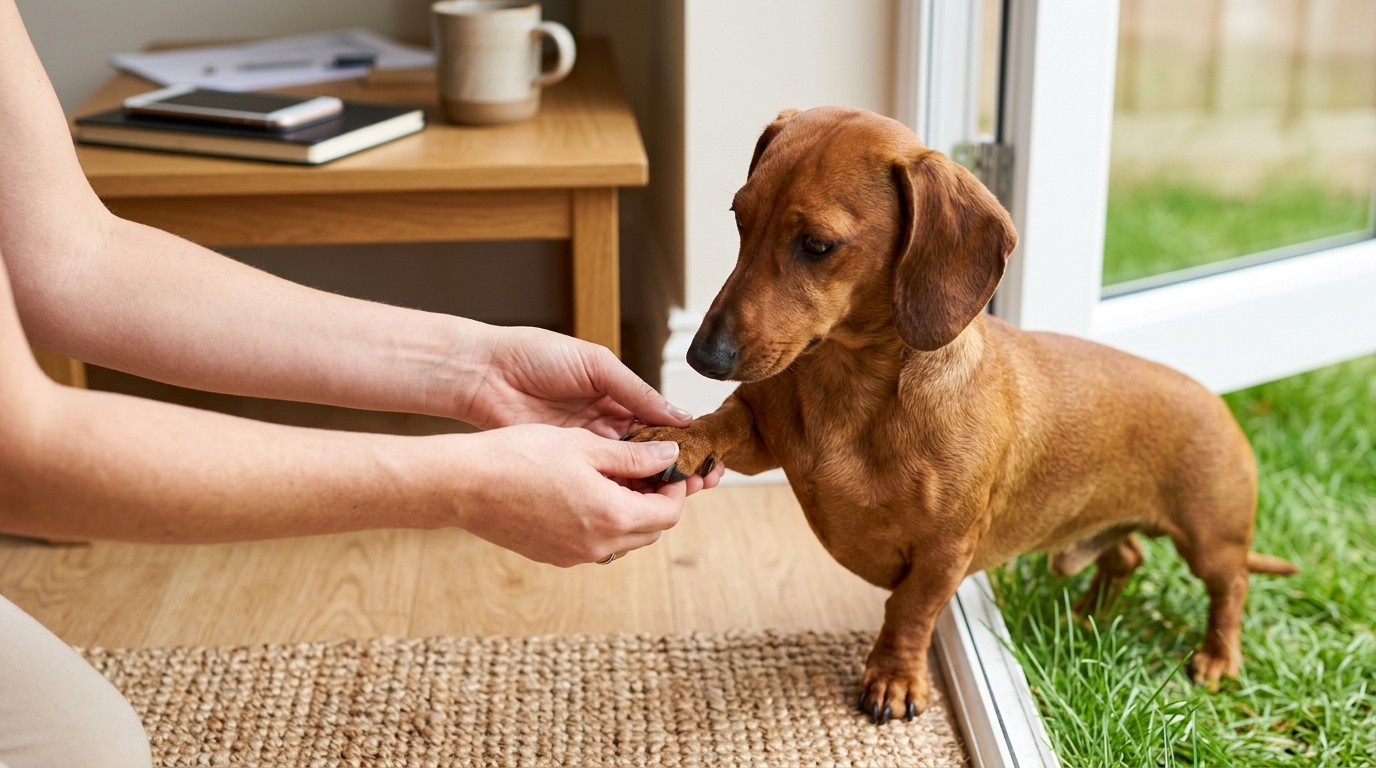
Broken or Bleeding Dog Nail: What to Do and How to Trim Safely
Learn how to stop dog nail bleeding fast, trim nails safely without hitting the quick, and know when a broken nail needs a same-day vet visit.
Signs and Symptoms of Ear Mites in Dogs You Shouldn't Ignore
Learn the early and advanced signs of ear mites in dogs, from head shaking to coffee-ground discharge, and when to get a vet's opinion online.
Can Humans or Cats Catch Ear Mites From Dogs?
Wondering if you or your cat can catch ear mites from your dog? Learn how Otodectes cynotis spreads between pets, the real risk to humans, and how to protect your household.