Table of Contents
Table of Contents
Short Answer
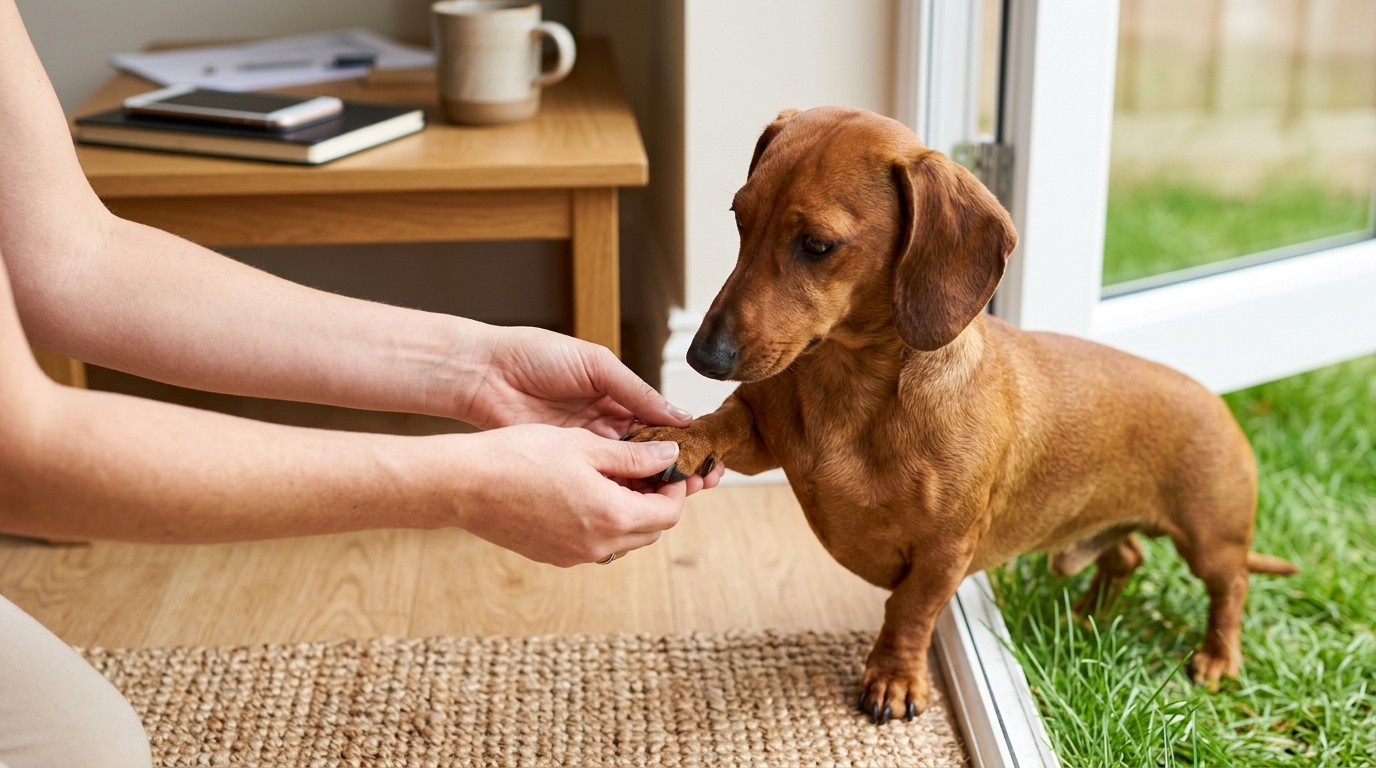
A broken or bleeding dog nail almost always means the quick, the blood vessel and nerve running through the center of the nail, has been cut or torn. Most cases can be managed at home with firm, direct pressure and styptic powder or plain cornstarch. Bleeding that will not stop after 10 to 15 minutes, a nail hanging by skin or tissue, or swelling and odor days later all call for same-day veterinary attention. Going forward, trim only the curved tip of the nail and stop well before the pink quick on light-colored nails.
Medically reviewed by Dr. Courtney, DVM.
Why Dog Nails Bleed So Much When Broken
A dog's claw is not solid keratin all the way through. Running down the center is the quick, a blood vessel and nerve bundle that supplies the nail with nutrients and sensation. When a nail breaks above where the quick ends, there is little to no bleeding. When it breaks at or below the quick, the bleeding can look alarming even though the actual wound is small.
Dogs with overgrown nails tend to have a longer quick, since the blood vessel grows along with the nail if it never gets trimmed back. That is one reason an overgrown nail is more than a tripping hazard, it also raises the odds of significant bleeding if the nail ever catches on something. Paws in general carry a rich blood supply, which is part of why even a fairly minor nail injury can leave streaks of blood across a floor or a dog bed.
Common Causes of a Broken or Torn Nail
Most torn nails happen during ordinary movement rather than dramatic accidents. A long nail catches on carpet fibers, a crack in the sidewalk, chain link fencing, or the edge of furniture during a fast turn or an excited jump off the couch, and it tears partially or fully away from the nail bed in that instant.
Nails that have gone too long between trims are more prone to this kind of injury simply because they extend past the paw pad and have more surface area to catch on. Brittle or weak nails are another factor. Dogs dealing with skin allergies that weaken nails can develop dry, flaky, or splitting claws that break more easily than healthy ones. Nail bed infections, whether bacterial, fungal, or tied to an autoimmune process, can also make the nail structure fragile.
Older dogs deserve a specific mention here. Dogs with joint pain or arthritis often drag their back feet slightly or do not lift their paws as cleanly during walks, which increases the chance of a nail catching on pavement or a rug edge. If your dogs with joint pain or arthritis seem to be tearing nails more often as they age, it is worth having their mobility evaluated alongside the nail itself.
First Aid: How to Stop a Dog's Nail from Bleeding
The first few minutes matter most, and staying calm helps your dog stay calmer too. Move to a quiet space where you can safely control the paw and follow these steps.
- Gently but firmly restrain your dog so it cannot lick the area or pull the paw away while you work. A second person holding and reassuring the dog makes this much easier.
- Press a clean piece of gauze or a soft cloth directly against the bleeding nail tip. Hold steady, firm pressure for at least 3 to 5 full minutes without lifting to check, since checking too early restarts the bleeding.
- If bleeding continues after that, apply styptic powder, plain cornstarch, or press the nail into a bar of soap to help seal the tip. Hold pressure again for another few minutes.
- Once bleeding slows, loosely wrap the paw with a clean bandage if your dog will tolerate it, but avoid wrapping tightly enough to cut off circulation. Check the paw again after 10 to 15 minutes to confirm the bleeding has actually stopped rather than just slowed.
For a broader walkthrough that also covers cuts and scrapes on the pads, our step-by-step first aid for a bleeding paw guide covers the same core technique with more detail on pad injuries specifically.
I ask owners to time themselves when applying pressure. Three minutes feels like a long time when your dog is squirming, but most people let go after twenty seconds and then think the styptic powder failed when really the pressure step was never finished.
When a Broken Nail Needs a Vet Instead of Home Care
Home first aid resolves the majority of nail bleeds, but a few situations are outside what should be managed without a professional look. Watch for the following:
- Bleeding that continues past 10 to 15 minutes despite consistent pressure and styptic powder
- A nail broken at the base, or one still hanging on by skin and soft tissue rather than a clean tear
- Swelling, pus, a foul odor, or limping that appears days after the initial injury seemed to settle
- Dogs on blood thinners or with a known clotting disorder, since even a minor nail bleed can behave differently
For a more detailed breakdown of red flags across all types of paw injuries, our article on when a bleeding paw is an emergency walks through the signs that separate a manageable injury from one that needs same-day care.
How to Trim Dog Nails Safely to Prevent Future Breaks
Regular trimming is the single best way to prevent future torn nails, since it keeps the quick from growing too far down the nail. The key is trimming small amounts frequently rather than trying to take off a lot at once.
On light-colored nails, you can usually see the pink quick through the nail itself. Cut only the curved tip before the nail starts to taper, staying clearly clear of that pink area. Dark nails hide the quick, so trim in small increments and check the cut cross-section after each pass. Once a small dark dot appears in the center of the cut surface, stop, since that dot signals you are approaching the quick.
Use sharp guillotine or scissor-style clippers rather than dull ones. A dull blade crushes the nail instead of cutting it cleanly, which is more painful and more likely to cause splitting. Replace or sharpen blades regularly if you trim nails at home often.
Dogs with joint pain or arthritis may resist having their paws handled at all, simply because holding a paw up and steady can be uncomfortable for a stiff or sore joint. Short trimming sessions, one paw at a time, and a calm, low-pressure setup tend to work better than trying to finish all four paws in one sitting with these dogs.
Caring for the Nail After Bleeding Stops
Once bleeding has stopped, the focus shifts to keeping the area clean and letting it settle. Keep the paw dry for the first 24 to 48 hours and limit rough play, running, or swimming during that window, since moisture and friction can reopen a freshly clotted nail.
Watch the paw over the following days for limping, excessive licking, or swelling around the nail bed, which can point to irritation or an infection setting in. A loose, breathable covering can help protect the nail for the first day if your dog tolerates a bandage without chewing at it, but it should not be left on for extended periods without checking underneath.
Regrowth timelines vary by dog and by how much of the nail bed was affected. Many dogs regrow a fully broken nail over several weeks to a few months, but severity differs enough between cases that no single timeline applies to every dog. If a nail is not visibly regrowing or the area stays sensitive well beyond the expected healing window, that is worth a follow-up look.
When Anxiety or Stress Makes Nail Trims Harder
It is common for a dog to become fearful or reactive about nail trims after going through a painful break, even if the trim itself was not the cause. Some dogs generalize that fear to any paw handling at all, which makes future prevention harder.
Gradual desensitization tends to work well over time. This means touching the paws briefly with no clipper involved, rewarding calm behavior, and slowly working up to touching the nail with the clippers closed before ever making a cut. Patience matters more than speed here.
For dogs with anxiety around nail trims that goes beyond mild wariness, a veterinarian can talk through options that make the process less traumatic for both the dog and the owner, rather than continuing to force trims that build more fear each time.
Once a dog associates nail trims with pain, forcing the issue usually backfires. I would rather see an owner book a video visit to talk through a calmer approach than keep wrestling a scared dog every few weeks.
Getting Veterinary Guidance Without Leaving Home
A quick video visit lets a licensed veterinarian actually look at the nail, assess whether infection risk is present, and advise on pain relief if your dog seems sore. This is especially useful when you are unsure whether what you are seeing at home is a manageable tear or something that needs in-person attention sooner rather than later.
TelaVets offers flat $65 video visits with a licensed veterinarian, available same-day, at night, and on weekends, with no memberships or hidden fees. Appointments run through a secure Google Meet call, and when medically appropriate, prescriptions such as pain medication or an antibiotic for a suspected infection can be sent the same day to a pharmacy of your choice. You can book a visit online in a few minutes.
If you are also managing a broader paw issue alongside the nail, our main guide on dog paws are bleeding covers pad injuries, cuts, and other causes of paw bleeding in more depth. Our articles on protecting your dog's paws from injury, why a paw keeps bleeding after playing or walking, and paw pad cut recovery timelines round out the topic if nail care is only part of what you are dealing with.
Frequently Asked Questions
How long does a broken dog nail take to stop bleeding?
Most minor nail bleeds stop within 5 to 10 minutes with firm, continuous pressure and styptic powder. If bleeding is still steady after 15 minutes of proper pressure, that points toward a deeper injury and a vet visit is a reasonable next step.
Can I use flour or cornstarch instead of styptic powder for a bleeding dog nail?
Cornstarch or flour can help form a clot in a pinch and are reasonable backups if you do not have styptic powder on hand. Styptic powder works faster and more reliably, so it is worth keeping a small container in a pet first aid kit at home.
Will a broken dog nail grow back?
In most cases, yes, the nail regrows over several weeks to a few months as long as the nail bed itself was not severely damaged or infected. Severity varies enough between injuries that a specific timeline cannot be promised for every dog.
Should I trim the rest of a torn nail myself?
A small torn tip that is only loosely attached can sometimes be trimmed carefully at home. A nail broken at the base or still hanging on by skin and tissue is safer to have a veterinarian address, since removing it incorrectly can cause more bleeding and pain than leaving it for a professional.
Why does my dog's nail keep splitting or breaking?
Repeated nail breaks often point to overgrown nails that have not been trimmed on a regular schedule, brittle nails related to diet or an underlying skin condition, or an allergy issue affecting nail health. A veterinarian can help identify whether there is a medical cause behind the pattern.
This article is for general educational purposes and is not a substitute for an in-person or virtual veterinary examination. If your dog is showing signs of severe pain, uncontrolled bleeding, or infection, seek prompt veterinary care.
Related Articles
Signs and Symptoms of Ear Mites in Dogs You Shouldn't Ignore
Learn the early and advanced signs of ear mites in dogs, from head shaking to coffee-ground discharge, and when to get a vet's opinion online.
Can Humans or Cats Catch Ear Mites From Dogs?
Wondering if you or your cat can catch ear mites from your dog? Learn how Otodectes cynotis spreads between pets, the real risk to humans, and how to protect your household.
Dog Paw Pad Cut: Symptoms, Home Care, and Recovery Timeline
Learn how to spot a dog paw pad cut, give proper first aid, and know when it is deep enough to need a vet. Includes healing timeline and prevention tips.