
Table of Contents
Table of Contents
Short Answer
Ear mites are highly species-specific, so humans almost never develop a true infestation from a dog. Cats and other pets in the home are a different story: they can pick up ear mites from an infested dog through close contact, shared bedding, or mutual grooming. If a person does have brief skin contact with an infested pet, any reaction is usually mild, temporary itching rather than an actual colony of mites living on the skin. The most reliable way to protect the rest of your household is to get the affected dog diagnosed and treated quickly.
Medically reviewed by Dr. Artamisha F, DVM, who has 17 years of clinical veterinary experience.
What Ear Mites Actually Are
Most ear mite cases in dogs and cats come from a tiny parasite called Otodectes cynotis. These mites live on the surface of the ear canal, feeding on skin debris, wax, and oils rather than blood. Because their entire life cycle plays out inside the ear canal or on the skin around it, they spread easily through direct, close contact between animals, which is exactly why they move so readily between pets sharing a home. For the full picture of how dogs get ear mites, what symptoms look like, and how vets treat them, the ear mites in dogs guide covers that ground in depth. This article stays focused on the question owners ask once a dog has already been diagnosed: who else in the house is actually at risk.
Can You Get Ear Mites From a Dog
Otodectes cynotis is adapted to live on cats, dogs, ferrets, and a handful of other animal hosts. Human skin is not a suitable environment for these mites to complete their life cycle, so they cannot set up an ongoing infestation on a person the way they can on a dog or cat. There are occasional case reports describing brief, itchy, bite-like irritation on a person's skin after handling a heavily infested pet, but this is a passing reaction, not a true infestation, and it typically clears on its own without treatment. There are no documented cases in veterinary literature of humans developing a lasting ear mite infestation from a dog. In practical terms, you do not need to worry about catching ear mites yourself, though washing your hands after handling an itchy pet's ears is always sensible hygiene.
Why Cats Are More at Risk Than People
Cats are a genuinely different situation. Cats and dogs are both susceptible to the same mite species, which means a cat living with an infested dog carries a real risk of picking up the parasite. Multi-pet households make transmission easy: cats and dogs often groom each other, nap in the same bed, or rub faces during play, and any of that contact can move mites from one animal to another. A cat that catches ear mites from a housemate dog may show the same signs, including head shaking, scratching at the ears, and dark, crumbly discharge that resembles coffee grounds. This is one reason a single infested dog in a household is rarely an isolated problem. Left unchecked, an untreated cat can become a hidden source of reinfestation, undoing the dog's treatment weeks after it seemed to clear up.
I see this pattern often in multi-pet homes. The dog gets treated, symptoms improve, then a few weeks later the mites are back. Almost every time, it turns out a cat in the house was never checked and was quietly carrying the infestation the whole time.
Other Pets and Animals That Can Catch Ear Mites
Ferrets are also commonly affected by Otodectes cynotis and should be included in any household check once a dog or cat has been diagnosed. Rabbits can develop a somewhat similar-looking ear mite problem, though it is typically caused by a different mite species that produces comparable symptoms like crusty debris and head shaking. Practically speaking, any susceptible pet sharing close space, bedding, or grooming contact with an infested dog should be treated as at some risk. Isolating the diagnosed pet as soon as possible, even in a separate room for a few days while treatment starts, meaningfully lowers the chance the parasite spreads further through the household.
Signs a Household Pet May Have Caught Ear Mites
Watch other pets for scratching at the ears, frequent head shaking, or dark reddish-brown, crumbly debris inside the ear canal, all classic signs of an active infestation. Cats in particular may become more withdrawn or seem irritable when their ears are touched, which can be easy to miss if a cat is already independent by nature. Symptoms do not always show up right away; it can take anywhere from a few days to a few weeks after exposure before a newly infested pet starts scratching or shaking its head noticeably. For a more complete breakdown of what to look for, including subtler early symptoms, the signs of ear mites in dogs article walks through the full list.
How to Protect the Rest of the Household
A few practical steps early on make a real difference in keeping ear mites contained to one pet.
- Isolate the diagnosed dog from other pets in the home as soon as possible, at least until treatment has started.
- Wash bedding, blankets, carriers, and grooming tools in hot water, since mites can survive for a limited time off a host.
- Have every other pet in the household checked by a veterinarian, even if they are not showing symptoms yet.
- Follow your veterinarian's guidance on treating all in-contact susceptible pets at the same time, which helps break the cycle of reinfestation between animals.
For households with more than one dog or a mix of species, the how to prevent ear mites in dogs in multi-pet households article goes deeper into longer-term prevention habits worth building into your routine.
When to Have a Veterinarian Check Your Pet's Ears
Scratching and head shaking can point to several different problems, including ear mites, bacterial or yeast infections, or allergies, and they can look nearly identical to an owner at home. A veterinarian can confirm what is actually going on with a simple otoscopic exam and, when needed, an ear swab checked under a microscope. Persistent scratching, an unpleasant odor, or visible discharge is worth a professional look rather than guessing and trying random home remedies. TelaVets offers same-day online veterinary visits for exactly this kind of question, letting a licensed veterinarian assess your dog's or cat's symptoms over video and discuss next steps, including a same-day emailed prescription when medically appropriate. Every visit is a flat $65 with no memberships or hidden fees, and appointments are available same-day, at night, and on weekends across all 50 states.
When an owner tells me one pet has ear mites and asks if the rest of the household is safe, my honest answer is that it depends on species and contact level. A quick video visit lets me ask the right questions and often tell them whether an in-person exam for the other pets is truly necessary or whether watching closely at home is reasonable for now.
Ongoing ear irritation, even after a mite diagnosis clears, is worth monitoring through follow-up care. The Dog Ear Health service page has more on how TelaVets supports ear-related concerns long after the initial visit.
Red Flags That Need Prompt Attention
Most ear mite cases are uncomfortable but not urgent. A short list of signs, however, means a pet should be seen quickly rather than monitored at home:
- An ear canal that looks swollen, bleeding, or has a strong foul odor
- Sudden head tilt, stumbling, or disorientation
- A pet that stops eating or reacts painfully when the ear area is touched
Any of these warrant prompt veterinary evaluation instead of waiting to see if things improve on their own.
Frequently Asked Questions
Can humans get ear mites from dogs?
Otodectes cynotis is not adapted to live on human skin, so it cannot establish a true, ongoing infestation in people. Brief contact with a heavily infested pet may occasionally cause mild, temporary itching or small bite-like irritation, but this resolves on its own and is not considered a documented infestation in veterinary literature.
Can my cat catch ear mites from my dog?
Yes. Cats and dogs are susceptible to the same mite species, and transmission between them is common in multi-pet homes through grooming, shared bedding, and general close contact. It is worth having a cat checked even if it is not showing obvious symptoms yet.
How long can ear mites live off a host, like on bedding or furniture?
Mites can survive for a limited period away from a host in the environment, which is why washing bedding, blankets, and grooming tools in hot water during treatment is a practical, low-effort precaution.
Do I need to treat all my pets at once if one has ear mites?
Often, yes. A veterinarian will frequently recommend treating all in-contact susceptible pets at the same time, even those without symptoms yet, to prevent a cycle where one untreated animal reinfests the others after treatment.
Are ear mites the same as a regular ear infection?
No. Ear mites are a specific parasite, while ear infections are more often caused by bacteria, yeast, or underlying allergies, and they can look quite similar from the outside. A vet exam helps tell the two apart, which is covered in more detail in the ear mites vs ear infection in dogs comparison.
Should I be worried about my ears if my dog has ear mites?
Generally no. Human ears are not a suitable environment for Otodectes cynotis to live and reproduce, so the practical concern in most households is protecting other pets rather than the people in the home.
This article is for general educational purposes and is not a substitute for an individual veterinary exam. If you notice concerning symptoms in your dog, cat, or other pet, contact a veterinarian for personalized guidance.
Sources: PetMD: Ear Mites in Dogs, Veterinary Partner (VIN): Ear Mites in Dogs and Cats
Related Articles
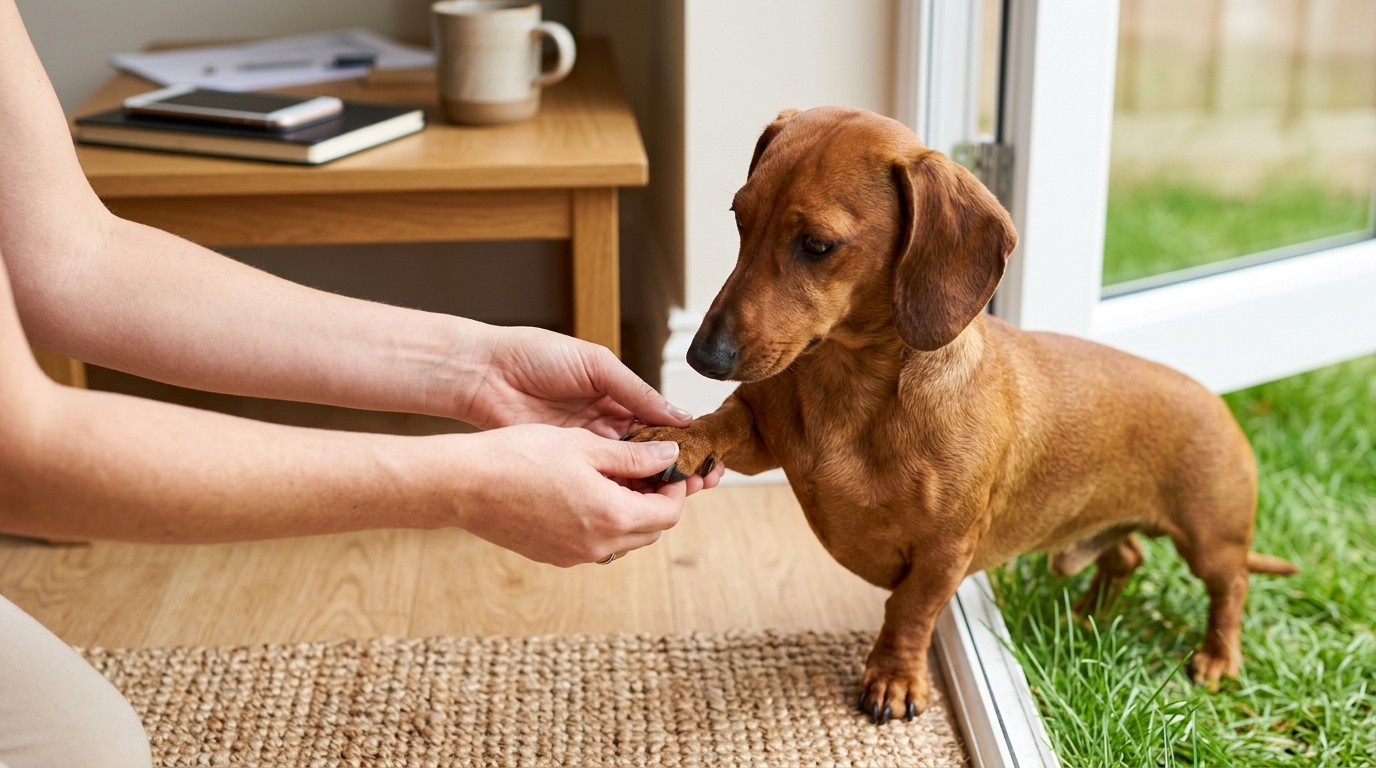
Broken or Bleeding Dog Nail: What to Do and How to Trim Safely
Learn how to stop dog nail bleeding fast, trim nails safely without hitting the quick, and know when a broken nail needs a same-day vet visit.

Signs and Symptoms of Ear Mites in Dogs You Shouldn't Ignore
Learn the early and advanced signs of ear mites in dogs, from head shaking to coffee-ground discharge, and when to get a vet's opinion online.

Dog Paw Pad Cut: Symptoms, Home Care, and Recovery Timeline
Learn how to spot a dog paw pad cut, give proper first aid, and know when it is deep enough to need a vet. Includes healing timeline and prevention tips.