Table of Contents
Table of Contents
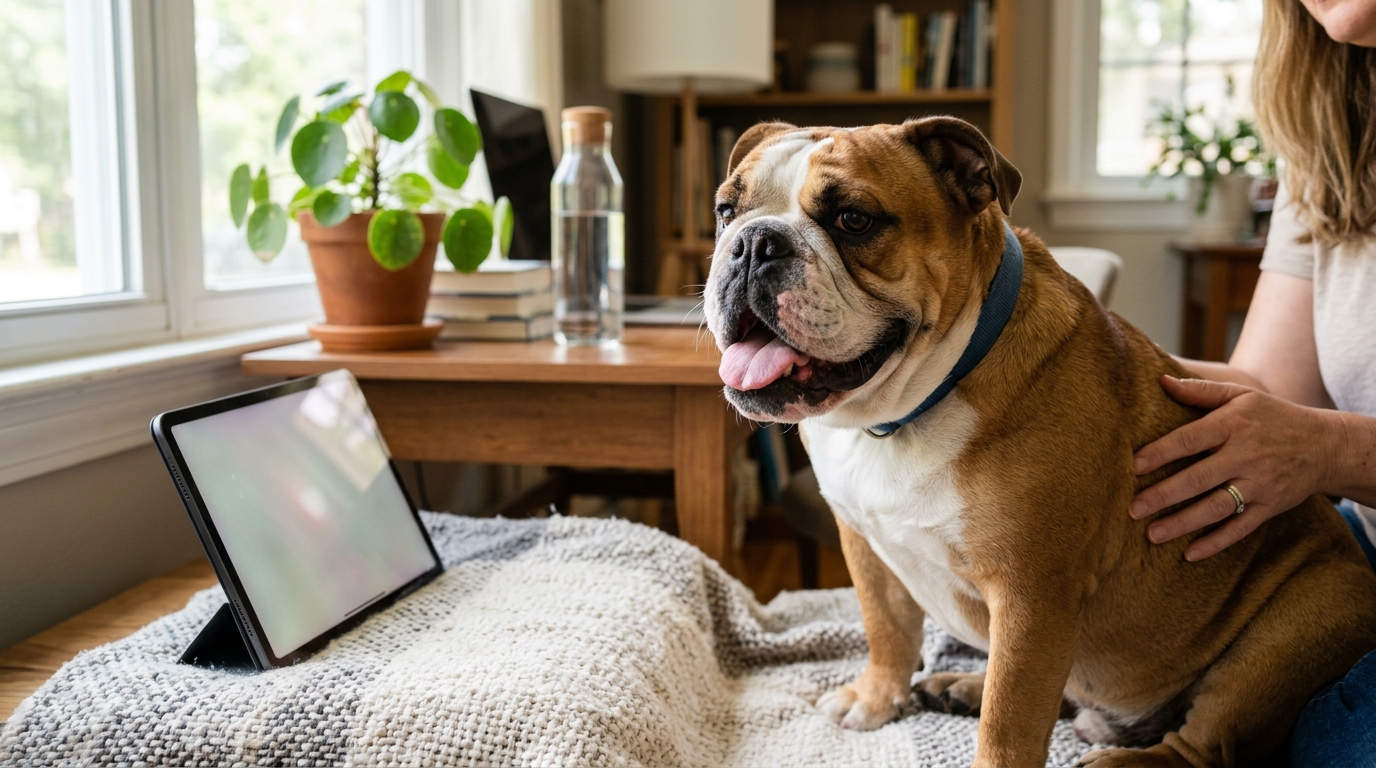
If you share your home with a French Bulldog, Pug, English Bulldog, Boston Terrier, or another flat-faced breed, you have probably noticed that panting in brachycephalic dogs sounds and looks different from what you see in a Labrador or a Border Collie. Their panting can be louder, more labored, and more frequent even after mild activity. In many cases this is simply part of how these breeds are built. But because their airway anatomy already works harder than average, it is worth knowing when panting is typical and when it signals something that needs a veterinarian's attention.
This guide walks through the anatomy behind brachycephalic breathing, what counts as normal panting for this group, the red flags that should never be ignored, and practical steps that can make daily life more comfortable for your dog. For a broader look at canine panting in general, our guide on normal versus excessive panting in dogs covers the basics that apply to every breed, and it is a good starting point if you have not yet read it.
Why Brachycephalic Dogs Pant Differently
Brachycephalic simply means "short-headed." It describes breeds bred for a shortened muzzle and flattened facial structure, including French Bulldogs, Pugs, English Bulldogs, Boston Terriers, Shih Tzus, and Boxers. This look comes from selective breeding over many generations, and while it gives these dogs their signature charm, it also compresses the nasal passages, throat, and airway structures into a smaller space than a longer-nosed dog of similar size would have.
Panting is a dog's primary cooling mechanism. As air moves rapidly over the moist surfaces of the tongue, mouth, and airway, evaporation helps lower body temperature, since dogs do not sweat the way humans do. In brachycephalic dogs, the narrowed airway means less air moves through with each pant, so the cooling system is working with less efficient equipment. That is one reason a Pug or Bulldog can look like it is panting harder than a similarly active retriever, even when both dogs are perfectly healthy. Some increased panting is expected in this breed group, but it still helps to understand what your own dog's normal pattern looks like.
The Anatomy Behind the Airway: A Brief Look at BOAS
Many brachycephalic dogs have some degree of Brachycephalic Obstructive Airway Syndrome, usually shortened to BOAS. This is not a single disease but a combination of anatomical traits that can make breathing more difficult. Two of the most common features are stenotic nares, which are narrowed nostrils that restrict airflow into the nose, and an elongated soft palate, which is excess tissue at the back of the throat that can partially block the airway, especially during exertion or excitement.
Severity varies widely from dog to dog. Some brachycephalic pets have relatively open airways and breathe with minimal difficulty, while others have more pronounced narrowing that makes normal activities, including cooling off through panting, noticeably harder. A veterinarian can assess airway structure during an exam and help you understand where your dog falls on that spectrum, which is useful whether you are managing an older dog or bringing home a new puppy.
What Counts as Typical Panting in These Breeds
For brachycephalic dogs, mild to moderate panting after play, excitement, warm weather, or even a car ride can be entirely normal. Because of their airway shape, this panting may sound raspier, snortier, or more labored than what you would hear from a longer-nosed breed doing the same activity. Many owners describe it as a persistent wheeze during panting episodes, which on its own is often just part of the breed's normal sound profile rather than a sign of distress.
The most useful thing you can do as an owner is learn your own dog's baseline. Pay attention to how quickly your dog settles after exercise, how it sounds at rest, and how it responds after a normal walk on a mild day. Once you know that baseline, it becomes much easier to notice when something is off. This is also useful context if you are researching related symptoms like panting and shaking together or wondering about panting heavily after exercise, since brachycephalic dogs often show a more pronounced version of these patterns than other breeds. If your dog is older, our piece on excessive panting in older dogs covers age-related changes that can layer on top of breed anatomy.
Warning Signs That Panting Has Crossed a Line
Because brachycephalic dogs already have less airway reserve, they can decline more quickly than other breeds during heat stress or airway distress. It is important to recognize the signs that panting has moved from typical to concerning.
- Bluish or grayish gums or tongue
- Collapse or extreme weakness
- Panting that will not slow down even after rest and cooling
- Gasping, distressed, or open-mouth breathing that looks effortful
- Vomiting occurring alongside heavy panting
Any of these signs warrants urgent in-person veterinary or emergency care rather than a wait-and-see approach. Brachycephalic breeds are known to deteriorate faster than other dogs once true respiratory distress or heat stroke sets in, so prompt action matters more than it might for a dog with a longer muzzle and more airway capacity. If vomiting alongside panting is a recurring concern rather than a one-time emergency, our dog panting and not eating article and our dog vomiting treatment page walk through when that combination needs closer evaluation.
Heat, Humidity, and Exercise: Extra Caution for Flat-Faced Dogs
Since panting is less efficient in brachycephalic dogs, they overheat faster than dogs with typical airway anatomy. According to PetMD, panting works through evaporative cooling as air passes over moist tissue in the mouth and airway, which is exactly the mechanism that is compromised in flat-faced breeds. This means the margin for error in hot or humid weather is smaller for a Bulldog or Pug than it is for many other breeds.
It is wise to avoid exercising these dogs during the hottest part of the day and to stay cautious in humid conditions generally, rather than relying on a specific temperature cutoff as a safe threshold. Humidity in particular reduces the effectiveness of evaporative cooling, so a warm and humid afternoon can be riskier than a hotter but drier day. Even short bursts of activity, like a brisk walk around the block or an enthusiastic play session, can trigger more noticeable panting in a brachycephalic dog than the same activity would in a longer-nosed breed. Extra body weight adds further strain on an already compressed airway, so maintaining a healthy weight is one of the more meaningful things an owner can do to support easier breathing over the long term.
Everyday Habits That Can Ease Breathing and Panting
Small daily adjustments can make a real difference for brachycephalic dogs. A well fitted harness, rather than a collar that sits directly on the neck and throat, reduces pressure on an already narrowed airway during walks. Keeping exercise sessions shorter and scheduling them during cooler parts of the day, such as early morning or evening, helps limit the intensity of panting episodes.
Constant access to fresh water and a shaded or air conditioned space to rest in gives these dogs a reliable way to cool down and recover between activity bursts. Watching body condition closely and discussing weight goals with a veterinarian is also worthwhile, since even a modest amount of excess weight can add noticeable strain to breathing in this breed group. If your dog also seems anxious in warm weather, during car rides, or in new environments, anxiety itself can intensify panting episodes, and our dog anxiety help resource covers options worth discussing with a vet. Skin irritation and allergies can also contribute to airway discomfort in some dogs, and our dog allergy care page outlines how that connection is typically evaluated. Some owners also notice heavier panting overnight, and our article on panting at night can help you decide whether that pattern fits within normal breed variation.
When an Online Vet Visit Can Help
If you are noticing a pattern of panting that seems unusual for your dog but does not involve any of the emergency red flags above, a virtual visit with a licensed veterinarian can be a useful first step. During a video appointment, a vet can review your dog's breathing pattern, ask about history and recent activity, watch a short video of an episode if you have one, and help you decide whether in-person diagnostics or care are needed next.
TelaVets offers flat $65 video visits with licensed veterinarians across all 50 states, with same-day and evening or weekend availability, and same-day emailed prescriptions when medically appropriate. This kind of visit works well for questions about whether your brachycephalic dog's panting at night is within normal range, or for general guidance on managing panting day to day. It is important to be clear, however, that severe respiratory distress or suspected heat stroke needs immediate in-person emergency care. A virtual visit is not a substitute for hands-on evaluation when a dog is in real trouble, but it can be a helpful, affordable way to get professional input on non-emergency concerns. You can learn more or book a visit through TelaVets online booking.
Frequently Asked Questions
Do all flat-faced dogs pant more than other breeds?
Not every brachycephalic dog pants excessively, but as a group they tend to pant harder and longer for the same level of exertion or heat compared to longer-nosed breeds. This comes down to their shortened airway anatomy, which makes the evaporative cooling process less efficient. It does not automatically mean something is wrong, but it is a normal quirk worth understanding.
What is Brachycephalic Obstructive Airway Syndrome (BOAS)?
BOAS describes a group of anatomical airway features common in flat-faced breeds, including narrowed nostrils and an elongated soft palate, that can make breathing and effective panting more difficult. Severity ranges from mild to significant, and a veterinarian can assess how much a specific dog's airway anatomy is affecting their breathing.
How hot is too hot for a brachycephalic dog?
There is no single safe temperature that applies to every dog, but general caution is warranted in hot or humid weather. It is generally safer to avoid peak midday heat, watch closely for signs of overheating such as excessive drooling, dark red gums, or collapse, and provide shade, water, and rest breaks proactively rather than waiting for obvious distress.
Can panting in a Pug or Bulldog be an emergency?
Yes. Panting that will not slow down after rest, bluish or grayish gums, collapse, extreme weakness, or gasping and distressed breathing are all signs that warrant urgent in-person emergency veterinary care rather than waiting to see if the dog improves on its own.
Should I talk to a vet if my flat-faced dog seems to pant a lot?
If the panting does not involve emergency signs, a licensed veterinarian can help evaluate whether the pattern is typical for the breed or whether it deserves further in-person workup. This is especially useful for new brachycephalic puppy owners who are still learning what is normal for their dog.
A Note From Our Veterinary Reviewer
This article was reviewed by Dr. Covadonga, DVM, who has practiced veterinary medicine for 20 years. Every brachycephalic dog has its own baseline, shaped by its specific airway anatomy, weight, and activity level, so the most reliable way to know whether a particular dog's panting is a concern is through a hands-on or virtual veterinary assessment rather than general guidelines alone.
This article is intended for general educational purposes and does not replace an individualized veterinary examination. If your dog shows signs of respiratory distress, collapse, or suspected heat stroke, seek in-person emergency veterinary care immediately.
Sources
PetMD: Why Do Dogs Pant? What To Know About Dogs and Panting
Related Articles
Broken or Bleeding Dog Nail: What to Do and How to Trim Safely
Learn how to stop dog nail bleeding fast, trim nails safely without hitting the quick, and know when a broken nail needs a same-day vet visit.
Signs and Symptoms of Ear Mites in Dogs You Shouldn't Ignore
Learn the early and advanced signs of ear mites in dogs, from head shaking to coffee-ground discharge, and when to get a vet's opinion online.
Can Humans or Cats Catch Ear Mites From Dogs?
Wondering if you or your cat can catch ear mites from your dog? Learn how Otodectes cynotis spreads between pets, the real risk to humans, and how to protect your household.