Table of Contents
Table of Contents
Short Answer
Worms visible in chicken droppings are usually roundworms or tapeworm segments, and they mean your bird is carrying an internal parasite load worth addressing. A light, occasional worm presence is fairly common in backyard flocks that forage outdoors, but visible worms combined with weight loss, a pale comb, lethargy, or a drop in egg production deserve a prompt look. A licensed veterinarian can confirm which parasite is involved and recommend an appropriate dewormer, since not every over-the-counter product is labeled or dosed correctly for chickens.
Medically reviewed by Dr. Hofmann, DVM, who has 16 years of clinical veterinary experience.
Why You Might See Worms in Chicken Droppings
Chickens are natural foragers, and that behavior is exactly how most internal parasites get into a flock. Birds pick up worm eggs directly from contaminated soil, or they eat intermediate hosts like earthworms, slugs, snails, or beetles that are already carrying larval parasites. Once ingested, the parasites mature in the digestive tract, and adult worms or worm segments eventually pass out in the droppings.
Free-range and pastured flocks are exposed to parasites more often than birds kept on wire floors or moved between clean paddocks regularly, simply because there is more contact with soil, old droppings, and the bugs that carry larvae. A run that has housed chickens for years without rest or cleanup tends to build up a heavier reservoir of parasite eggs in the ground, which raises the odds that a bird picking through that dirt will pick up a meaningful worm burden over time.
What the Worms in the Poop Actually Look Like
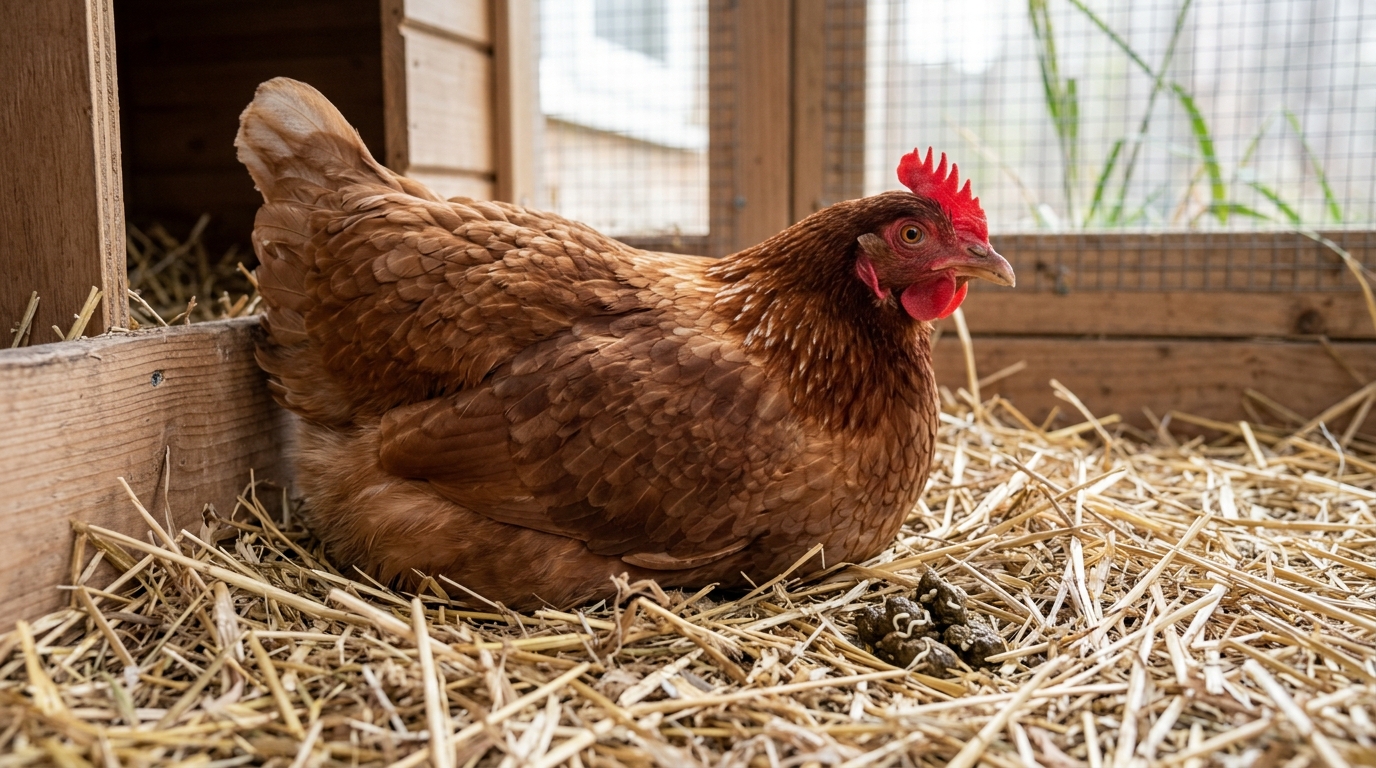
Not all worm findings look the same, and that matters for figuring out what you are dealing with. Long, thin, pale strands that may still be moving when fresh are typically roundworms, also called ascarids, which live in the intestines and can grow several inches long in heavier infections. Small, flat, whitish pieces that resemble grains of rice or short ribbon segments are usually tapeworm segments rather than a whole worm, since tapeworms shed body segments packed with eggs instead of passing intact.
Thin, hair-like worms that are difficult to spot without close inspection are more consistent with capillary worms, sometimes called hairworms, and these are easy to miss on a casual glance at the droppings. It is also worth knowing that a single dropping sample can look completely normal even when a bird has an active worm burden, since shedding is not constant. Absence of visible worms on any given day does not rule out parasites, which is part of why persistent symptoms matter more than one clean-looking sample.
Other Signs That Often Come With a Worm Burden
Worms rarely show up as the only symptom. Chickens carrying a significant parasite load often display a cluster of other changes alongside what you find in the droppings.
- Weight loss despite a normal or even increased appetite
- A pale comb or wattles instead of the usual deep red color
- Reduced egg production or eggs with noticeably thin shells
- Lethargy, or a hunched and puffed-up posture
- Diarrhea or droppings that look unusually watery or discolored alongside the worms
When Worms in Poop Point to a More Urgent Problem
Most worm findings are manageable once identified, but a few combinations of signs move a case from something to watch to something to act on quickly.
- Blood mixed with the worms or in the droppings themselves
- A bird gasping, stretching its neck, or making a wheezing or clicking sound, which can point to gapeworm affecting the windpipe rather than a purely intestinal parasite. If you notice these chicken respiratory symptoms, do not assume it is a simple cold, since gapeworm needs different handling than gut parasites
- Sudden collapse, refusal to eat or drink, or several birds in the flock affected at the same time
If you are also seeing bright red streaks in the droppings, it is worth reading through chicken poop with blood, since that combination of blood plus visible worms tends to warrant a faster response than either finding alone.
Are Chicken Worms Dangerous to the Flock or to People
Most of the common chicken worms, including roundworms, tapeworms, capillary worms, and gapeworm, are species-specific parasites that are not considered a direct infection risk to people through normal, casual contact with the flock. That said, basic hygiene is still a sensible habit anytime you are handling birds or cleaning a coop, including washing your hands afterward and avoiding letting droppings sit uncleaned for long stretches. The bigger concern with an untreated, heavy worm load is what it does to the flock itself. Chronic parasite burdens can drag down body condition, slow growth in younger birds, and reduce egg output, and in already weak or very young chickens, a heavy infection can become a genuine health threat rather than just a nuisance.
How a Veterinarian Approaches a Suspected Worm Case
When an owner reports worms in the droppings, a veterinarian typically starts by asking about the specific appearance of what was found, along with the bird's appetite, energy level, comb color, and egg laying pattern. A fecal exam, when feasible, helps narrow down which parasite is actually present rather than guessing from symptoms alone. This distinction matters because not every dewormer sold for livestock or poultry is labeled for the parasite you are actually dealing with, and using the wrong product, or the wrong dose, can waste time while the worm burden continues to build.
This is where a virtual visit fits well into flock care. TelaVets offers flat $65 video appointments with licensed veterinarians, available across all 50 states, where you can describe symptoms, show photos of the droppings or the bird itself, and get guidance on next steps or a same-day prescription when it is medically appropriate.
When an owner describes rice-like segments or long pale strands in the droppings, I am usually already thinking tapeworm versus roundworm before we even get to the video call. What changes my recommendation is the bird's overall condition. A thin, pale-combed hen with a heavy worm load needs a more urgent plan than a bird that looks bright and is still laying well.
For flocks with a confirmed or strongly suspected parasite issue, it is also worth reviewing chicken worms treatment options so you understand what a typical treatment plan involves before your appointment.
General Deworming and Coop Management Practices
Prevention leans heavily on managing the ground your chickens walk on. Rotating the run or pasture area, even in a simple back-and-forth pattern between two enclosures, reduces the buildup of parasite eggs and larvae in any one patch of soil. Keeping the coop and run as dry and well-drained as practical also discourages the slugs, snails, and beetles that serve as intermediate hosts for several worm species. Beyond the physical setup, routine observation of droppings and body condition during normal chores is one of the simplest ways to catch a developing problem before it becomes a flock-wide issue.
- Rotate or rest ground periodically instead of using the same patch year-round
- Keep bedding and litter dry and change it on a regular schedule
- Limit contact between your flock and wild birds or rodents where possible
- Watch any newly added birds closely before mixing them into the main flock
- Talk to a veterinarian before starting any deworming product, even one sold over the counter
For a broader look at coop hygiene and general flock conditions, the Penn State Extension guide on deworming backyard poultry is a useful outside reference alongside a veterinarian's guidance.
A Second Clinical Perspective on Worm Symptoms
Parasite loads in backyard flocks do not always stay mild, and waiting too long to address early signs can change the picture quickly.
I have seen backyard flock owners wait a few weeks after first spotting worms because the birds still seemed fine, and then egg production drops and one hen starts looking noticeably thin. Catching it early with a quick virtual consult usually means a simpler treatment plan than waiting until several birds are affected.
How This Connects to Other Chicken Poop Changes
Worms are just one of several things that can change the look of chicken droppings. Our full chicken poop colors and what they mean guide covers the broader picture of normal versus abnormal droppings, which is a useful starting point if you are not sure whether what you are seeing is a color issue, a texture issue, or an actual parasite. If the droppings look watery on top of any worm findings, chicken pooping water walks through the separate causes behind that symptom, since digestive upset does not always mean parasites. Color changes deserve their own look too, and our articles on green chicken poop and yellow chicken poop cover situations that can sometimes overlap with, but are usually distinct from, a worm burden. For general flock health support, the chicken treatments hub is a good place to browse other common conditions we help with.
When to Book a Virtual Vet Visit
Persistent visible worms, unexplained weight loss, or a noticeable drop in egg production are all reasonable reasons to book a visit rather than waiting to see if things resolve on their own. TelaVets video appointments happen over Google Meet, so you can show the veterinarian the droppings, the bird's comb color, or its general condition directly from your coop or kitchen table. Same-day, night, and weekend availability also fits the reality of flock checks, since parasite symptoms do not always show up during normal vet office hours.
Frequently Asked Questions
Can I see worms in chicken poop with the naked eye?
Yes, in many cases. Roundworms are large enough to spot as long, thin strands, and tapeworm segments look like small flat rice-like pieces. Capillary worms are thread-like and much harder to see without close inspection, so a fecal exam is more reliable for catching those.
What does it mean if there are white worm-like pieces in chicken poop?
Small, flat, white or off-white pieces that resemble grains of rice are usually tapeworm segments rather than a whole worm. Fresh segments sometimes show slight movement, which can help distinguish them from other debris in the droppings.
Is it safe to eat eggs from a chicken with worms?
This depends on the specific parasite involved and whether a dewormer has been started, since some products carry an egg withdrawal period. Rather than assuming it is fine, it is safer to ask a veterinarian about timing, especially once treatment begins.
How often should backyard chickens be checked or treated for worms?
There is no single universal schedule that fits every flock. Frequency depends on how much your birds free-range, how often you rotate ground, and whether symptoms actually appear. Periodic observation of droppings and body condition, paired with veterinary guidance when something looks off, tends to work better than routine blanket dosing.
Can worms in chicken poop go away on their own?
A very light, incidental exposure may resolve without intervention in an otherwise healthy bird. However, a visible, ongoing worm burden usually needs an appropriate dewormer rather than simply waiting it out, since the load tends to build rather than clear on its own.
Disclaimer
This article is intended for general education about backyard poultry health and is not a substitute for an individualized veterinary exam. If your bird is showing severe or rapidly worsening symptoms, including labored breathing, collapse, or blood in the droppings, seek veterinary attention promptly rather than waiting.
Sources
Penn State Extension: Deworming Backyard Poultry
Related Articles
Chicken Watery Eyes: Causes, Warning Signs, and When to Call a Vet
Watery or bubbly eyes in chickens can signal irritation or infection like coryza. Learn the causes, warning signs, and when to get a vet's help fast.
Why Is My Chicken Sneezing? Causes and When to Call a Vet
Chicken sneezing can be harmless dust irritation or an early sign of respiratory illness. Learn the difference and when to book a same-day virtual vet visit.
Why Is My Chicken Coughing? Causes, Warning Signs, and What to Do
Chicken coughing can signal dust irritation or a respiratory infection like mycoplasma. Learn the causes, warning signs, and when to book a same-day online vet visit.