Table of Contents
Table of Contents
Short Answer
Blood in chicken poop is most often caused by coccidiosis, a common intestinal parasite infection that hits young or newly stressed birds especially hard. Sometimes what looks like blood is actually a normal reddish-brown cecal dropping, which chickens pass a few times a day and which can look alarming without being dangerous. Any true blood streaking, clots, lethargy, or more than one affected bird in the flock deserves prompt attention rather than a wait-and-see approach. A licensed veterinarian can review photos and symptoms over a video visit and help you figure out whether it is an emergency or something you can manage at home.
Medically reviewed by Dr. Courtney, DVM, who has 14 years of experience treating backyard flocks and companion animals.
Is It Really Blood, or Just a Cecal Dropping?
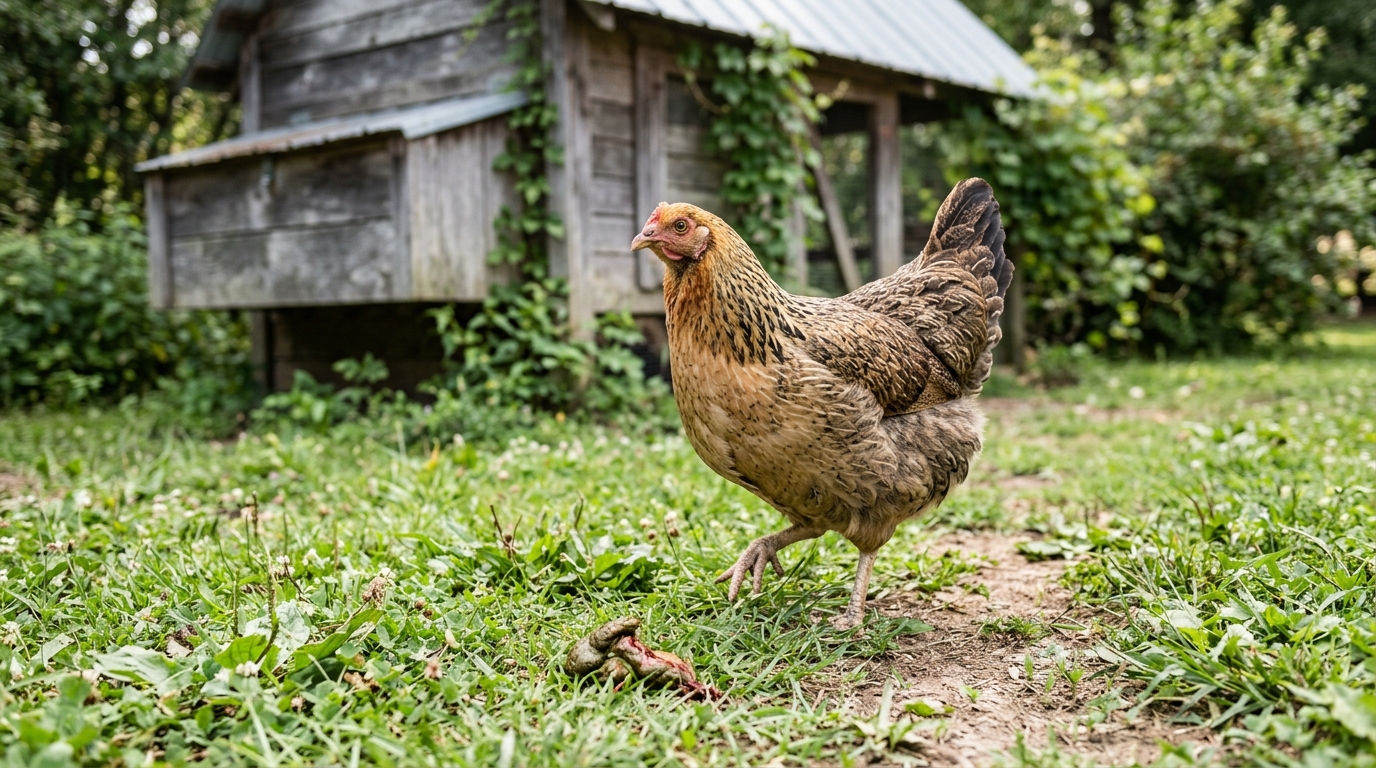
Before assuming the worst, it helps to know that chickens naturally pass two types of droppings. Most of what you see is firm and brown with a white cap of urates. A few times a day, though, hens also pass a cecal dropping, which comes from a separate part of the digestive tract and looks pasty, mucus-like, and reddish-brown to tan. Many new chicken owners mistake this normal cecal dropping for blood, especially the first time they see one.
True blood tends to look different. It usually appears as bright red streaks or small clots mixed into a dropping that is otherwise runny, mucousy, or unusually foul smelling. Consistency and frequency matter more than color alone. A single odd-looking dropping from one bird is far less concerning than repeated bloody stools, especially if the bird also seems quiet, fluffed up, or off its feed.
If you are unsure, it helps to photograph droppings over a day or two rather than reacting to one snapshot. Note how many birds are affected, how often it happens, and whether the bird's behavior has changed. This pattern is often more useful to a vet than the color of a single dropping.
Coccidiosis: The Most Common Cause of Bloody Chicken Poop
Coccidiosis is caused by Eimeria, a group of protozoal parasites that invade and damage the lining of the intestines, particularly the cecum. It is by far the most common reason backyard chickens pass bloody droppings, and it disproportionately affects chicks, young pullets, and any bird recently moved into a damp, crowded, or unsanitary coop. Adult birds can carry some natural resistance after early exposure, but a sudden change in housing or hygiene can still tip the balance toward illness.
Typical signs include bloody or maroon-tinted droppings, ruffled or puffed feathers, lethargy, a pale comb, reduced appetite, and birds huddling away from the rest of the flock. Some chickens will sit hunched with their eyes partly closed. Because coccidiosis damages the gut lining, affected birds often become dehydrated and weak fairly quickly, and in young or untreated birds the disease can turn fatal within just a few days, according to guidance from the Merck Veterinary Manual.
Treatment usually involves an anticoccidial medication such as amprolium, but the right choice and dosing depend on the bird's age, weight, and how advanced the infection is, which is why this is not something to guess at from an online chart. A vet will typically base treatment decisions on the severity of symptoms and the history of the flock rather than a one-size-fits-all approach.
Coccidiosis can look mild one day and turn serious within 48 hours, especially in chicks. If I see bloody droppings paired with lethargy or a pale comb, I want to talk to the owner the same day rather than wait to see if it clears up on its own.
Other Reasons a Chicken May Pass Bloody Droppings
Coccidiosis gets most of the attention, but it is not the only cause of blood in chicken poop. Intestinal parasites, including certain worms, can irritate the gut lining enough to cause spotting or streaking in the droppings, usually alongside weight loss or a dull appearance over time. If worms are on your list of suspects, our article on chicken poop with worms covers what to look for and how it differs from a coccidiosis picture.
Bacterial infections, including necrotic enteritis, can also cause dark, bloody, or foul-smelling stool, particularly in flocks with crowded or unsanitary conditions. These infections can be difficult to distinguish from coccidiosis by appearance alone, which is one reason a proper evaluation matters rather than assuming a single cause.
Not all visible blood comes from inside the digestive tract. Cloacal or vent trauma from egg laying, pecking injuries, or a prolapse can leave blood on the outside of a dropping rather than mixed within it. This kind of injury is often easier to spot on close inspection of the vent area itself. Occasionally, ingested toxins or spoiled feed irritate the digestive tract enough to cause temporary blood-tinged stool, and an isolated stressor like a recent deworming treatment or sudden diet change can sometimes cause a short-lived change that resolves within a day or two without becoming a bigger problem.
Red Flag Symptoms That Mean Do Not Wait
Some symptoms alongside bloody droppings point toward an urgent situation rather than something to monitor. If you notice any of the following, it is best to seek veterinary guidance the same day:
- Lethargy, hunching, or a chicken sitting apart from the rest of the flock
- Pale comb or wattles, noticeable weakness, or reluctance to stand
- Multiple birds showing bloody droppings around the same time
- Blood combined with straining, vent swelling, or visible tissue
- No improvement, or clear worsening, within 24 hours
A single strange-looking dropping from an otherwise bright, active bird is far less urgent than any of the signs above.
What a Vet Visit for Bloody Chicken Poop Usually Involves
When you connect with a licensed veterinarian about bloody droppings, the visit usually starts with a review of photos or short video of the droppings themselves, along with a look at the bird's overall behavior and body condition. The vet will typically ask about the bird's age, whether any new birds have recently joined the flock, deworming history, and how clean and dry the coop bedding has been. These details help narrow down whether coccidiosis, parasites, a bacterial cause, or something else is more likely.
Based on what is found, a vet may suggest supportive care at home, recommend a fecal exam through a local avian vet or agricultural extension lab for confirmation, or issue a same-day prescription such as an anticoccidial when it is medically appropriate for the situation. For flock owners exploring wider parasite concerns, our chicken parasite treatment page and chicken bloody poop causes resource offer more detail on related presentations.
Owners are often surprised by how much we can assess through video, from how a bird carries itself to comb color and breathing pattern. It does not replace hands-on exams for every case, but it is often enough to know whether this needs urgent in-person care or can be managed with guidance at home.
TelaVets offers flat $65 video visits with a licensed veterinarian across all 50 states, with same-day, evening, and weekend appointments and no membership required. When treatment is appropriate, prescriptions are typically emailed the same day so you can fill them through an online or local pharmacy. That said, some cases, particularly ones needing hands-on exams, surgical care, or in-house lab diagnostics, still call for an in-person avian or poultry veterinarian, and a telehealth visit can help you decide when that next step is needed. You can book directly through the TelaVets booking page when you are ready.
Supportive Home Care While You Wait for Guidance
If you have noticed bloody droppings and are waiting to speak with a vet, a few simple steps can help stabilize the bird without overstepping into guesswork on medication.
- Move the affected bird to a separate, quiet space away from the rest of the flock to reduce stress and limit potential spread of illness.
- Offer clean water with poultry electrolytes and keep feed available, without forcing the bird to eat if appetite is reduced.
- Clean out and dry the coop bedding, since damp, dirty litter is one of the biggest drivers of both coccidia and bacterial growth.
- Hold off on starting any medication on your own, since the right anticoccidial choice and dosing depend on the bird's age, weight, and how far the illness has progressed.
These steps buy time and reduce risk to the rest of your flock, but they are not a substitute for an actual diagnosis when symptoms are more than mild.
Preventing Bloody Droppings in Your Flock Going Forward
Most cases of bloody droppings trace back to housing and hygiene, which means prevention is largely about routine management rather than anything exotic. Keeping brooders and coops dry, well ventilated, and on a regular cleaning schedule goes a long way toward keeping coccidia and bacteria from building up in the bedding. Any new or returning birds are worth quarantining for a couple of weeks before mixing them with your established flock, since even healthy-looking birds can introduce parasites or infections that your existing hens have no immunity to.
For chicks, medicated starter feed can help support natural immunity to coccidia during the vulnerable early weeks, though it is worth talking with a vet about when and how to transition off it as the flock matures. Beyond that, simply making dropping checks part of your normal flock routine, glancing at the coop floor or droppings boards every few days, means you are far more likely to catch a change early, before it turns into a bird that is visibly sick. Our chicken treatment options page and chicken respiratory treatment resource are useful starting points if you want to build out a broader flock health routine.
Related Chicken Poop Colors and What They Signal
Bloody droppings are just one of several dropping changes that can signal something worth watching in a flock. Green droppings often reflect diet changes or stress and are covered in our article on why your chicken might be pooping green. Watery droppings without any blood present can point toward heat stress, parasites, or the early stages of illness, which we break down in why your chicken might be pooping water. Yellow droppings are sometimes perfectly normal depending on diet and hydration, and other times linked to a specific gut issue, a distinction explained in yellow chicken poop and whether it is normal. If you want the full picture of what different colors and textures mean across your flock, our pillar guide on chicken poop colors and what they mean ties all of these presentations together in one place.
Frequently Asked Questions
Can bloody chicken poop go away on its own?
A mild, isolated reddish dropping that turns out to be a normal cecal poop can resolve without any intervention. True blood tied to coccidiosis or an infection rarely clears up on its own, and it can worsen quickly, especially in young birds, so it is worth having it checked rather than assuming it will pass.
How fast does coccidiosis kill chickens?
How quickly it progresses depends on the bird's age, immune status, and how heavy the parasite load is, but young or untreated birds can decline within just a few days. That timeline is exactly why prompt evaluation matters more than a wait-and-see approach.
Is bloody chicken poop contagious to the rest of the flock?
Coccidia and many bacterial causes of bloody droppings spread through contaminated droppings and damp bedding, so an infected bird can pass the problem along to flockmates. Isolating the affected bird and cleaning the coop promptly reduces the risk to the rest of your flock.
Can humans get sick from handling a chicken with bloody droppings?
Basic hygiene, like washing your hands thoroughly after handling birds or cleaning coops, is recommended since some poultry pathogens can pose a low risk to people, particularly children or anyone with a weaker immune system. Gloves are a reasonable extra precaution when dealing with visibly bloody or foul-smelling droppings. The CDC's guidance on backyard poultry has more detail on safe handling.
Do I need a fecal test to confirm coccidiosis?
A fecal exam, or a vet's assessment of symptoms and flock history, is the most reliable way to confirm coccidiosis rather than guessing based on dropping appearance alone. Many other causes of bloody or discolored stool can look similar without testing or a thorough history.
Can TelaVets prescribe medication for a chicken with bloody poop?
A TelaVets veterinarian can evaluate your bird over a video visit, ask about history and symptoms, and issue a same-day prescription, such as an anticoccidial, when it is medically appropriate for that specific case. Some situations may still be referred for in-person exams or local fecal testing when a hands-on evaluation is needed.
A Quick Note Before You Go
This article is meant to help you understand what bloody chicken poop might mean and how to respond, but it is not a substitute for an individualized veterinary evaluation. If your bird is showing red flag symptoms like lethargy, pale comb, or multiple affected flock members, do not wait to seek care. Booking a video visit with a licensed veterinarian through TelaVets is a fast way to get guidance on whether your situation needs same-day treatment, at-home monitoring, or a referral to an in-person avian vet.
Sources
Related Articles
Chicken Watery Eyes: Causes, Warning Signs, and When to Call a Vet
Watery or bubbly eyes in chickens can signal irritation or infection like coryza. Learn the causes, warning signs, and when to get a vet's help fast.
Why Is My Chicken Sneezing? Causes and When to Call a Vet
Chicken sneezing can be harmless dust irritation or an early sign of respiratory illness. Learn the difference and when to book a same-day virtual vet visit.
Why Is My Chicken Coughing? Causes, Warning Signs, and What to Do
Chicken coughing can signal dust irritation or a respiratory infection like mycoplasma. Learn the causes, warning signs, and when to book a same-day online vet visit.