Table of Contents
Table of Contents
Your dog suddenly stops, stretches out his neck, and starts making a loud honking snort that sounds like he's choking on something. Or maybe it's a series of dry, hacking coughs that ends with a gag. Both moments are unsettling, and both often get lumped together by worried pet parents typing "why does my dog sound like he's choking" into a search bar at 11 p.m. Reverse sneezing and coughing are actually two different reflexes with different causes, different levels of urgency, and different treatments. Learning to tell them apart can save you an unnecessary emergency trip, or help you recognize when a symptom you dismissed as harmless actually needs attention.
This article breaks down what each sound and posture looks like, what typically triggers it, and when either one crosses the line from a quirky habit into a reason to call a veterinarian. This content was reviewed for accuracy by Dr. Courtney, DVM, who has 14 years of clinical experience in general practice.
Why These Two Sounds Get Confused
Reverse sneezing and coughing share a few traits that make them easy to mix up. Both happen suddenly, both repeat several times within a single episode, and both can sound alarming enough that owners describe them as honking, gagging, or choking. A dog having either type of episode may look distressed even when nothing serious is going on, and that visual alone is enough to send a pet parent into a panic. Once you know what to watch for, though, the two are usually easy to tell apart just by observing body posture and the direction the air is moving.
What Reverse Sneezing Actually Is
Reverse sneezing, sometimes called paroxysmal respiration by veterinarians, is a rapid, forceful inhalation of air through the nose rather than an exhalation like a normal sneeze. It happens when the soft palate or throat becomes irritated and spasms, and the dog responds by snorting air inward repeatedly to try to clear it. To an owner watching, it often looks like the dog is trying to inhale a bug through his nose, standing rigid with his neck extended and elbows spread while making loud, snorting or honking noises.
Common triggers include excitement, a tight collar or leash pressure against the throat, pollen or dust irritation, and eating or drinking too quickly. Small breed dogs and brachycephalic breeds, those with short muzzles like French Bulldogs, Pugs, and Boston Terriers, are especially prone to this because their soft palate tends to be long relative to their airway. An episode usually lasts anywhere from a few seconds to a couple of minutes and resolves on its own, often without you needing to do anything beyond gently stroking your dog's throat or offering a quick distraction.
What a True Cough Sounds and Looks Like
A true cough originates in the lower airway or lungs, not the nasal passages, and involves forcefully expelling air rather than pulling it in. Coughing in dogs shows up in several forms: a dry, hacking cough that sounds harsh and repetitive, a moist or "productive" cough that may bring up foam or mucus, or a cough that ends in a gag or retch, which owners often describe as their dog "coughing up something" even when nothing comes out.
Coughing is frequently linked to respiratory infections, seasonal or environmental allergies, structural issues like a collapsing trachea, or more serious concerns such as heart disease affecting the lungs. According to PetMD's overview of canine coughing, the underlying causes range from mild irritation to conditions that need ongoing veterinary management, which is why a persistent cough deserves more attention than a single reverse sneezing episode typically does. For a full breakdown of possible causes, our pillar guide on why dogs cough and when to see a vet covers this in more depth, and our dog coughing treatment page outlines how a licensed vet can help evaluate ongoing symptoms. If the cough is dry and ends in gagging without producing anything, our article on dog dry cough followed by gagging walks through what that specific pattern usually means.
Sound, Posture, and Duration Side by Side
When you're trying to figure out which reflex you're witnessing in real time, posture is often the fastest clue. A dog reverse sneezing tends to stand still with his neck stretched out and his head extended forward or slightly downward, making a snorting sound as air is pulled in through the nose. A dog with a true cough is more likely to hunch or crouch slightly, sometimes lowering the head and neck as the cough forces air and occasionally mucus outward, at times ending in a retch or a small amount of foam.
Duration and pattern matter too. Reverse sneezing episodes are typically brief, self-limiting, and don't repeat constantly throughout the day in a healthy dog. A cough tied to a chronic condition, on the other hand, tends to be recurring and often progressive, showing up multiple times a day and gradually worsening over days or weeks rather than resolving on its own. If your dog has an ongoing snorting habit that you suspect is reverse sneezing but want confirmed, our dedicated page on reverse sneezing in dogs goes into more detail on triggers and home management.
When Reverse Sneezing Needs a Vet's Attention
Most reverse sneezing is harmless and doesn't require treatment beyond limiting known triggers, like switching to a harness instead of a collar for dogs who spasm when leash pressure hits their throat. That said, there are exceptions worth watching for. Frequent, worsening episodes, especially ones that seem to be increasing in intensity or happening almost daily, can sometimes point to underlying issues like nasal masses, polyps, dental disease affecting the nasal passages, or nasal mites in some regions. If reverse sneezing is accompanied by nasal discharge, bleeding from the nose, or visible facial swelling, that combination warrants a veterinary evaluation rather than watching and waiting. Isolated episodes in an otherwise healthy, active dog are rarely an emergency and often don't need a same-day appointment.
When a Cough Signals Something More Serious
Coughing deserves a slightly lower threshold for concern than reverse sneezing, mainly because the list of underlying causes includes conditions that can progress if left unaddressed. A cough that persists for more than a few days, rather than clearing up within 24 to 48 hours, is generally a signal to get it checked rather than assume it will pass. This is especially true if the cough is paired with lethargy, appetite loss, fever, or exercise intolerance, since that combination often points to something beyond simple throat irritation.
A harsh, honking cough that develops shortly after boarding, daycare, or a trip to the dog park is a classic presentation of kennel cough in dogs, a highly contagious respiratory infection that spreads easily in group settings. A dry cough that worsens with excitement or pressure on the neck, particularly in small breed and toy dogs, can point toward collapsing trachea in dogs, a structural airway issue that tends to be chronic and manageable rather than curable. A soft, moist cough paired with fatigue, especially in older dogs or small breeds prone to certain heart conditions, is one of the patterns discussed in our article on dog coughing and heart disease, and it isn't something to wait out at home.
Red Flags That Mean Call a Vet Right Away
While most reverse sneezing and many mild coughs can be monitored at home, certain signs mean you should seek veterinary care promptly regardless of which reflex you think you're seeing.
- Bluish or pale gums
- Labored or open-mouth breathing at rest
- Collapse or fainting during a coughing episode
- Coughing up blood or persistent vomiting alongside the cough
- Refusal to eat or drink for more than a day
If your dog shows any of these, don't wait to see if it resolves on its own. For a more complete rundown of urgent versus non-urgent scenarios specific to coughing, our article on when to take a coughing dog to the vet walks through the decision-making process in greater detail.
How a Virtual Vet Visit Can Help You Sort It Out
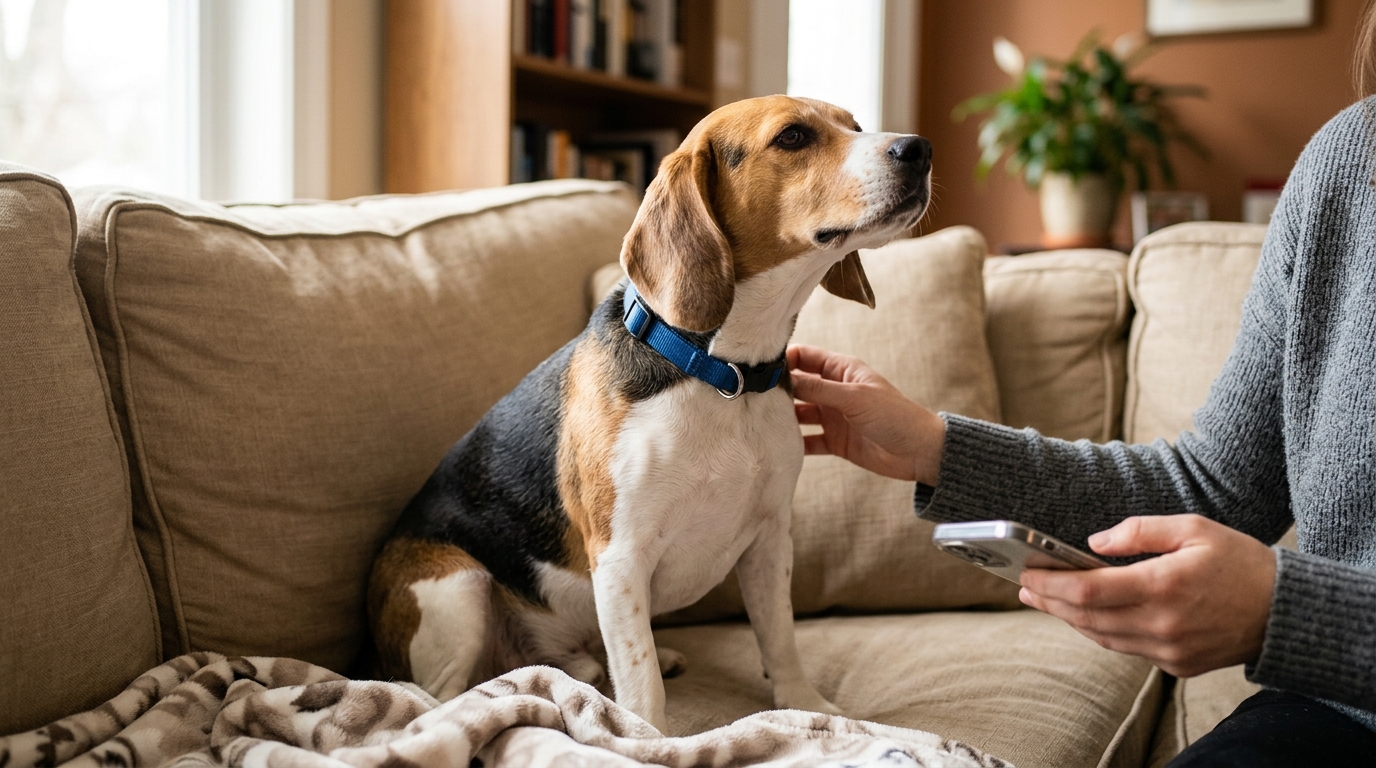
One of the most useful tools you have as a pet parent trying to tell these two reflexes apart is your phone camera. A licensed veterinarian can often distinguish reverse sneezing from a true cough just by watching a short video of an episode, since the posture, sound direction, and body movement are usually clear on screen even if your dog doesn't cooperate live during the appointment.
TelaVets offers same-day video visits with a licensed veterinarian for a flat $65, with no memberships and no hidden fees, available across all 50 states. Appointments happen over a secure Google Meet call, so you can show the vet exactly what you're seeing and get guidance on whether it looks like benign reverse sneezing, a cough that needs monitoring, or something that warrants an in-person exam. If your dog's history and symptoms point toward a condition like collapsing trachea or heart disease that needs x-rays or chest auscultation to confirm, the veterinarian can advise you on next steps for in-person diagnostics, and when appropriate, send a same-day prescription to your pharmacy of choice. Think of a virtual visit as a fast, affordable way to triage the situation and get expert direction, not a replacement for imaging when structural or cardiac disease is suspected. You can book a visit online whenever you need a second opinion on what you're hearing.
Frequently Asked Questions
Is reverse sneezing in dogs an emergency?
An isolated episode of reverse sneezing in an otherwise healthy dog is rarely an emergency and usually resolves within a minute or two without intervention. Episodes that become more frequent, last longer, or occur alongside nasal discharge, bleeding, or facial swelling should be evaluated by a veterinarian to rule out underlying causes like polyps or dental disease.
Can reverse sneezing turn into a cough?
Reverse sneezing and coughing are driven by different mechanisms, one pulling air inward through the nose and the other pushing air out from the lower airway, so one doesn't technically "turn into" the other. That said, irritation in the throat can sometimes trigger both reflexes close together, so it's worth noting if your dog seems to be doing both during the same episode and mentioning that to your vet.
Why does my dog reverse sneeze when excited?
Excitement, leash pulling, and eating or drinking too quickly can all put pressure on the throat or soft palate in dogs prone to this reflex, particularly small breeds and flat-faced breeds. The spasm is generally harmless and tends to happen in dogs who are otherwise perfectly healthy.
How long should a dog cough last before I worry?
A cough lasting more than a few days, or one that shows up alongside lethargy, reduced appetite, or fever, should prompt a veterinary evaluation rather than waiting to see if it clears up on its own. Coughs tied to infections or chronic conditions rarely resolve without some form of treatment or management.
Can I record my dog's episode to show the vet?
Yes, and it's genuinely one of the most helpful things you can bring to an appointment, whether virtual or in person. A short video capturing both the sound and your dog's body posture during the episode gives the veterinarian real information to work with, often making it much easier to identify whether you're dealing with reverse sneezing, a cough, or something else entirely.
This article is intended for general educational purposes and does not replace a hands-on veterinary examination. If your dog is showing any emergency red flags, including labored breathing, collapse, or pale or bluish gums, seek immediate in-person veterinary care.
Sources
Related Articles

Dog Dry Cough Followed by Gagging: What It Means
Wondering why your dog has a dry cough followed by gagging? Learn the common causes, red flags, and when to get a licensed vet's opinion online with TelaVets.

Dog Coughing and Heart Disease: Warning Signs Owners Shouldn't Ignore
Learn how dog coughing and heart disease can be connected, which breeds are at higher risk, and when a cardiac cough needs urgent veterinary attention.
Kennel Cough in Dogs: Symptoms, Contagious Period & Treatment
Learn how to recognize kennel cough in dogs, how long it stays contagious, and what treatment usually involves. Reviewed guidance from a licensed veterinarian.